
Lula Creates Committee to Counter Trump’s Tariff Threat on Brazil

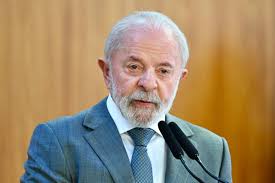
Brazilian President Luiz Inácio Lula da Silva announced the formation of an interministerial committee to coordinate economic and trade countermeasures in response to U.S. President Donald Trump’s proposed 50% tariff on all Brazilian imports, set to take effect on August 1, 2025. As reported by Xinhua and The Statesman, the committee, chaired by Vice President Geraldo Alckmin, who also serves as Minister of Development, Industry, Trade, and Services, held its first meeting on July 15, 2025, with industrial sector representatives. Lula’s move, backed by Brazil’s Economic Reciprocity Law, counters Trump’s tariff threat, which he linked to Brazil’s judicial actions against former President Jair Bolsonaro, highlighting tensions over trade and sovereignty.
Committee Formation and Trump’s Tariff Threat
The interministerial committee, established through Decree No. 12.551 published in Brazil’s Diário Oficial da União on July 15, 2025, aims to protect Brazil’s economy by formulating countermeasures, including potential reciprocal tariffs, import restrictions, and suspension of intellectual property rights for U.S. firms, per TechStory and Agência Brasil. Lula’s announcement followed Trump’s letter, posted on Truth Social, accusing Lula of orchestrating a “witch hunt” against Bolsonaro, who faces trial for allegedly attempting a coup in 2023, as noted by ProKerala and Mangalorean.com. Trump’s tariff, described as the harshest of his administration in 2025, also cited “unfair trade practices” despite U.S. government data showing a $410 billion trade surplus with Brazil over 15 years, per TechStory.
Lula rejected Trump’s claims, stating on X, “Brazil is a sovereign nation with independent institutions and will not accept any form of tutelage. Any measure to increase tariffs unilaterally will be responded to in light of Brazil’s Law of Economic Reciprocity,” as reported by Telangana Today. The committee, including at least five cabinet ministers and business leaders, will explore diplomatic solutions while preparing for retaliation, such as matching the 50% tariff, per China Daily Asia. Posts on X, including from @LulaOficial, emphasized the decree’s role in safeguarding Brazil’s economy, while @rafaraujocn criticized Lula’s approach as risking a trade war with the U.S.
Context of U.S.-Brazil Tensions
Trump’s tariff threat, announced days after Brazil hosted the BRICS summit, appears tied to geopolitical concerns, including Brazil’s role in the BRICS bloc and its judicial proceedings against Bolsonaro, a Trump ally, per NPR and The New York Times. Lula countered that Brazil’s judiciary is independent, stating, “What he can’t do is think that he was elected to be the world’s sheriff,” per Agência Brasil. The U.S., Brazil’s second-largest trading partner after China, exported more to Brazil than it imported in 2024, undermining Trump’s claim of an unfair trade relationship, as noted by Lula and Finance Minister Fernando Haddad, per TechStory.
The Economic Reciprocity Law, enacted in April 2025 with bipartisan support, authorizes Brazil to impose counter-tariffs and suspend trade concessions, per Valor International. Lula emphasized diplomacy, citing Brazil’s 201-year relationship with the U.S., but vowed to act if negotiations fail, per Agência Brasil. The committee’s first meeting on July 15 focused on assessing impacts on sectors like aviation and banking, which have already felt pressure, per TechStory. Industry leaders, such as coffee farmer Gláucio de Castro, expressed concerns about economic fallout, despite supporting Trump’s politics, per NPR.
Geopolitical and Economic Implications
The tariff dispute reflects broader U.S.-Brazil tensions, exacerbated by Trump’s criticism of BRICS and its push for alternatives to the U.S. dollar, as highlighted by Lula at the Rio de Janeiro BRICS summit, per Reuters. Brazil’s appeal to the World Trade Organization (WTO), coordinated with other affected nations, signals a multilateral response, per Agência Brasil. The National Education Policy (NEP) 2020’s focus on international collaboration supports Brazil’s diplomatic efforts, aligning with its role in MERCOSUR and BRICS to diversify trade partnerships, per Planalto and Buenos Aires Herald.
However, escalation risks a trade war, with Georgetown trade policy professor Marc Busch warning that Brazil’s response could be “dramatically different” due to Trump’s politicization of trade over judicial matters, per NPR. Posts on X, such as @Metropoles, noted Lula’s meetings with exporters to rethink U.S. trade policy, reflecting Brazil’s proactive stance.
Looking Ahead
The committee’s formation positions Brazil to negotiate from strength while preparing for retaliatory measures if Trump’s tariffs proceed. Lula’s emphasis on sovereignty and diplomacy, backed by the Economic Reciprocity Law, underscores Brazil’s intent to protect its $70 billion export market to the U.S., per TechStory. The WTO appeal and coordination with BRICS and MERCOSUR allies could mitigate economic fallout, but the dispute’s political undertones, tied to Bolsonaro’s trial, complicate resolutions. As Brazil navigates this crisis, the committee’s decisions will shape its economic and diplomatic strategy, balancing national interests with global trade dynamics.
Comments are closed.