
LA Declares Emergency, Imposes Curfew Amid Immigration Protests and Federal Troop Deployment
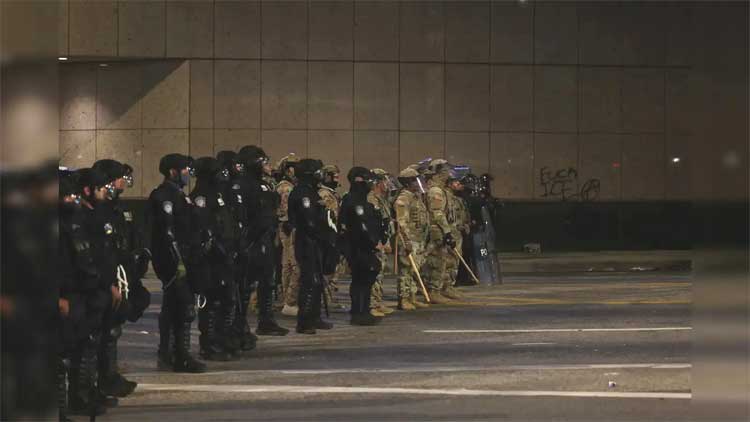
Mayor Karen Bass imposed an overnight curfew in downtown Los Angeles on Tuesday after days of unrest sparked by federal immigration raids and growing clashes between protesters and law enforcement. The curfew, effective from 8 p.m. Tuesday to 6 a.m. Wednesday, covers a one-square-mile area of downtown where demonstrations have continued since Friday.
“We reached a tipping point,” Bass said during a news conference, noting that 23 businesses had been looted. She also declared a local emergency to respond to the escalating situation.
The curfew exempts local residents, homeless individuals, credentialed media, and emergency personnel, according to LAPD Chief Jim McDonnell. He cited a rise in “unlawful and dangerous behavior” since Saturday as justification for the measure.
National Guard Expands Role
National Guard troops, originally deployed to protect federal buildings, were seen Tuesday escorting Immigration and Customs Enforcement (ICE) officers making arrests—marking a significant expansion of their role. ICE confirmed the Guard was now providing security for federal agents during enforcement operations and assisting with transport.
Although Guard troops can detain attackers temporarily, arrests are handled by law enforcement. This expanded role brings troops closer to direct involvement in immigration enforcement, a move the Trump administration supports but which state officials oppose.
Marines Deployed Without State Approval
President Donald Trump authorized the deployment of roughly 4,000 National Guard troops and 700 Marines to Los Angeles following weekend protests. California Governor Gavin Newsom filed an emergency court request to block the deployment, arguing it would escalate tensions and risk civil unrest. A hearing is set for Thursday.
While the Marines have not been engaged in crowd control, their presence has raised concerns among local officials. Marine Corps Gen. Eric Smith told Congress the troops are trained in crowd control but lack arrest authority.
LAPD Chief McDonnell warned that the uncoordinated military presence complicates local law enforcement efforts: “It’s a significant logistical and operational challenge.”
Trump Hints at Insurrection Act
President Trump said he may invoke the Insurrection Act—a rarely used legal authority to deploy the military domestically to quell rebellion or civil disorder. “If there’s an insurrection, I would certainly invoke it. We’ll see,” he said from the Oval Office. He later described protesters as “animals” and “a foreign enemy” during a speech at Fort Bragg.
The federal response follows a wave of protests that began after ICE raids arrested dozens of workers. Demonstrators blocked a major freeway, set cars on fire, and clashed with police, who responded with tear gas and rubber bullets. Protests have since calmed, with most remaining peaceful, though looting and isolated violence have continued.
Over 100 Arrests, Legal Challenges Mount
LAPD has arrested more than 100 individuals, mostly for failure to disperse. Others face charges including assault with a deadly weapon, looting, and attempted murder related to a Molotov cocktail incident. Seven officers were injured, with two hospitalized and later released.
Protests remain focused around City Hall and a nearby federal complex holding detainees from the immigration raids. Obscene graffiti targeting federal authorities and President Trump was visible across downtown landmarks.
In nearby Santa Ana, armored Guard vehicles now block roads to federal offices. Homeland Security officials said protesters have thrown Molotov cocktails, set fires, and defaced federal property.
Political and Legal Fallout
Democratic lawmakers from California have condemned the federal deployment, calling it a “manufactured crisis.” State Attorney General Rob Bonta has filed a lawsuit to halt the use of federal troops in immigration enforcement. The Pentagon estimates the deployment will cost $134 million.
Despite opposition from local and state officials, Trump said his actions prevented “complete obliteration” of Los Angeles.
The decision to deploy the National Guard without a request from California’s governor marks a rare and significant escalation in the administration’s efforts to enforce immigration laws—and has set the stage for a major legal and constitutional battle.
Comments are closed.