
Kashmir Faces Mounting Snowfall Deficit Amid Climate Change

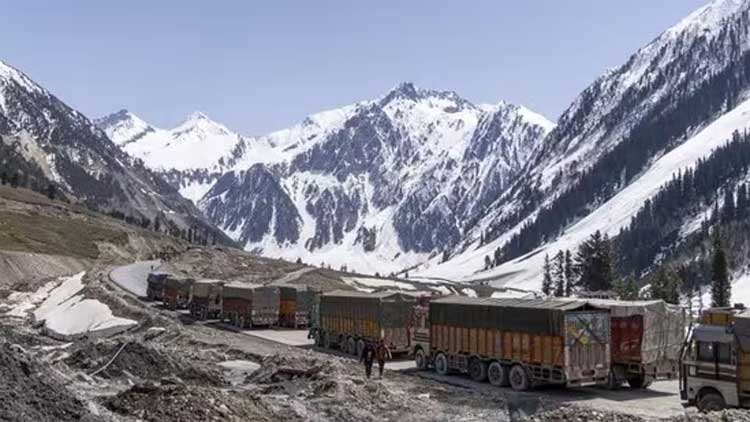
Snow-scarce winters are rapidly becoming the new normal in Kashmir, particularly across lower-altitude areas — a stark departure from weather patterns witnessed just a few decades ago. Experts attribute the shift to climate change–driven alterations in precipitation, warning of serious consequences for livelihoods, agriculture and long-term water security.
This winter, Kashmir is once again grappling with a pronounced snowfall deficit. While higher mountain reaches have received limited snowfall, Srinagar and the surrounding plains have largely remained snowless. Although several parts of the Valley recorded snowfall toward the end of 2025 and during the first week of January this year, overall accumulation has been far below historical norms.
The pattern, repeated year after year, points to a broader climatic shift linked to global warming. Long-term research on winter precipitation trends in Kashmir shows a steady decline in snowfall, particularly at lower elevations.
Environmental and earth scientist Prof Shakeel Romshoo, Vice Chancellor of the Islamic University of Science and Technology (IUST), Awantipora, said that although mountains are naturally expected to receive more snowfall due to altitude differences, overall winter precipitation in Kashmir — especially in the form of snow — has declined significantly.
“This is primarily due to climate change. Winter precipitation in Kashmir used to fall largely as snowfall, not rain,” Prof Romshoo said.
He noted that snow-deficient winters have become increasingly frequent, even during Chillai Kalan, traditionally the harshest phase of Kashmir’s winter. “Winters in Kashmir have changed,” he said, adding that research over the past decade shows the trend has intensified.
According to Prof Romshoo, the decline is aggravated by drier-than-usual autumns followed by warmer winters, with temperatures in February and March often exceeding long-term averages. “This results in reduced snowpack buildup,” he said.
The situation is further compounded by early heat waves across the South Asian plains, including Kashmir, which accelerate glacier melt during subsequent summer and autumn months.
“Our field measurements over the past ten years confirm accelerated glacier retreat across Jammu, Kashmir and Ladakh,” Prof Romshoo said, highlighting a combination of diminished snow accumulation and increased ice loss across the Himalayan region.
The implications are far-reaching. Reduced snowfall and shrinking glaciers threaten water availability in Himalayan habitations, impacting irrigation systems and drinking water supplies. “Agricultural productivity could suffer due to irregular water flows,” Prof Romshoo warned, adding that hydropower generation also faces potential disruptions.
He said changing weather patterns are already affecting multiple livelihood activities across the region.
Average temperatures in Kashmir have risen by about 1.2 degrees Celsius, compared with a global increase of roughly 0.7 degrees Celsius over the past century. Fragile mountain ecosystems, experts caution, are especially vulnerable to the accelerating effects of global warming.
Comments are closed.