
Justice Yashwant Varma Moves Supreme Court Against Inquiry Report; CJI Gavai to Form Separate Bench

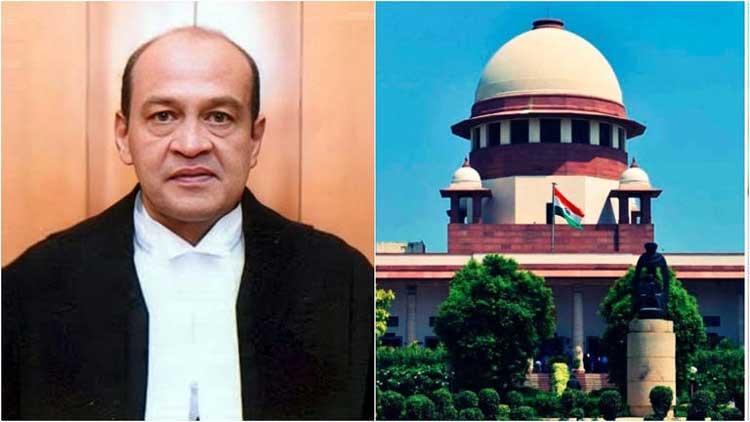
Chief Justice of India Bhushan R. Gavai on Wednesday said he would constitute a separate bench to hear a petition filed by Justice Yashwant Varma of the Allahabad High Court, who has challenged the findings of a Supreme Court-appointed in-house inquiry panel that concluded there was “strong inferential evidence” of his “covert or active control” over sacks of charred cash found at his official residence in Delhi earlier this year.
Appearing for Justice Varma, senior advocate Kapil Sibal mentioned the matter before the CJI and sought an expedited hearing, citing important constitutional concerns. CJI Gavai recused himself from hearing the case, noting, “It would not be proper for me to take up the matter because I was part of that conversation.” He assured that another bench would be constituted to take it up.
Impeachment Motion Moves Forward
The development comes amid the Centre’s ongoing efforts to initiate impeachment proceedings against Justice Varma. On July 21, the opening day of the monsoon session, 145 Lok Sabha and 63 Rajya Sabha MPs submitted notices in their respective Houses seeking his removal from office.
Justice Varma had moved the Supreme Court on July 17, challenging both the May 3 report of the three-judge inquiry committee and the May 8 recommendation by then CJI Sanjiv Khanna, which urged Parliament to initiate his impeachment.
Judge Terms Report “Unsustainable”
Justice Varma’s writ petition describes the inquiry report as “unsustainable” and accuses the committee of adopting an “outcome-driven approach” based on a “preconceived narrative.” It alleges violations of natural justice, claiming the panel ignored critical aspects like the ownership, authenticity, and recovery context of the burnt currency.
While acknowledging some cash was recovered from the outhouse, Justice Varma maintains that the committee failed to establish his culpability, reversing the burden of proof and expecting him to disprove wrongdoing.
In-House Inquiry Findings
The in-house panel, constituted on March 22, was led by Chief Justices Sheel Nagu (Punjab & Haryana High Court), GS Sandhawalia (Himachal Pradesh High Court), and Anu Sivaraman (Karnataka High Court). It submitted its report to CJI Khanna on May 3.
The 64-page report concluded that while no direct evidence linked Justice Varma to the stash, there was “strong inferential evidence” suggesting he had knowledge or control over the money. It further held that public trust was eroded, and even if he was unaware of the stash, its presence at his official residence constituted grave judicial misconduct.
Denial, Conspiracy Allegations, and Transfer
Justice Varma has denied wrongdoing, calling the case a conspiracy. The Supreme Court’s press note on May 8 confirmed he submitted a written response to the inquiry, reiterating his position. During the investigation, he was divested of judicial work and transferred back to the Allahabad High Court from the Delhi High Court, where the March 14 incident occurred.
As first reported by Hindustan Times on June 18, Justice Varma earlier rejected CJI Khanna’s suggestion to resign or take voluntary retirement, and in a detailed May 6 letter, he urged reconsideration of both the process and the outcome.
How It All Began
The controversy erupted after a fire at Justice Varma’s Delhi residence on March 14, during which firefighters discovered sacks of charred cash in the outhouse. The Chief Justice of the Delhi High Court reported the discovery to CJI Khanna, leading to the panel’s formation.
As political and judicial scrutiny intensifies, the case now shifts back to the Supreme Court, where Justice Varma hopes to challenge the validity of the inquiry and protect the constitutional guarantees afforded to a sitting judge.
Comments are closed.