
Justice Surya Kant Sworn In as 53rd Chief Justice of India; Highlights Pendency, Judicial Reforms as Top Priorities

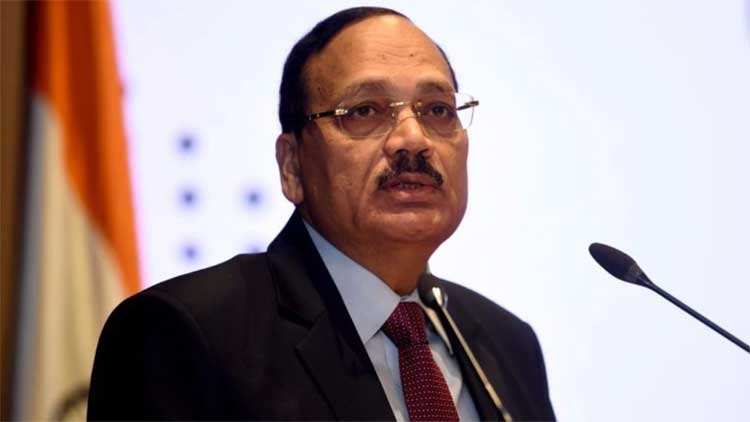
Justice Surya Kant was sworn in on Monday as the 53rd Chief Justice of India (CJI), capping an extraordinary journey from a small village in Haryana to the country’s highest judicial office. President Droupadi Murmu administered the oath of office at Rashtrapati Bhavan, in the presence of Vice-President CP Radhakrishnan, Prime Minister Narendra Modi and several Union ministers.
During his six-year tenure in the Supreme Court, Justice Kant has played a key role in several landmark constitutional rulings, including verdicts on the abrogation of Article 370, the revision of Bihar’s electoral rolls, and the Pegasus spyware case.
Who Is Justice Surya Kant?
Born on February 10, 1962, in Petwar village of Hisar district, Justice Kant studied in local government schools before earning his law degree from Maharshi Dayanand University, Rohtak, in 1984. He began his legal career the same year at the Hisar district court, later moving to the Punjab and Haryana High Court in Chandigarh, where he built a distinguished practice in constitutional, service and civil law.
His rise in the legal field was rapid. At 38, he became Haryana’s youngest-ever advocate general in 2000 and was designated a senior advocate the following year. He was elevated to the Punjab and Haryana High Court bench in 2004, served as chief justice of the Himachal Pradesh High Court from 2018, and entered the Supreme Court in May 2019. Along the way, he earned a master’s degree in law with top honours from Kurukshetra University.
In the Supreme Court, Justice Kant authored more than 300 judgments, including on key constitutional matters. He served on constitution benches that upheld the abrogation of Article 370, ruled on Section 6A of the Citizenship Act, granted interim bail to former Delhi chief minister Arvind Kejriwal, and recently delivered the verdict in the presidential reference on timelines for gubernatorial assent to state bills.
As executive chairman of the National Legal Services Authority (NALSA), he introduced the Veer Parivar Sahayata Yojana 2025, aimed at providing free legal assistance to soldiers, veterans and their families.
Top Priorities as Chief Justice
Speaking to Hindustan Times ahead of taking charge, Justice Kant said addressing the nearly 90,000 pending cases in the Supreme Court would be a central challenge of his tenure.
“One of my foremost challenges is the arrears in the Supreme Court… My immediate focus is on optimum utilisation of judicial force,” he said, adding that he would prioritise clearing cases that have held up hearings in lower courts. He also stressed the need to revive the “healthy practice” of approaching high courts before escalating matters to the Supreme Court.
Justice Kant underlined the importance of discipline, consistency and efficient case management within the judiciary. He said technological upgrades, improved infrastructure and better procedural guidelines could significantly improve the court’s functioning.
‘A Farmer’s Patience, A Poet’s Empathy’
Reflecting on his early years in Petwar village, Justice Kant said his judicial philosophy draws from the life lessons of his rural upbringing. “A farmer’s patience taught me that true growth requires time, care and resilience… Justice, like a harvest, cannot be forced,” he said.
He added that a “poet’s empathy” helps him remain sensitive to the human stories behind every legal dispute. This blend, he believes, ensures that judgments remain both fair and humane.
Describing his approach as “humanistic,” Justice Kant said the law must ultimately serve people while maintaining fairness and neutrality. He emphasised that judges must be aware of broader social realities even as they function as impartial interpreters of the law.
Mediation a Key Reform Focus
Beyond reducing pendency, Justice Kant identified mediation as a “game-changing” tool to relieve pressure on courts. He said encouraging government departments and agencies to adopt mediation could prevent thousands of disputes from reaching the judiciary.
“Even small changes—procedural reforms, digital adoption, infrastructure upgrades—can have a transformative impact,” he said, adding that empathy and communication would be central to his leadership as CJI.
Comments are closed.