
Junta leader Gen. Mamdi Doumbouya is declared winner of Guinea’s election, provisional results show

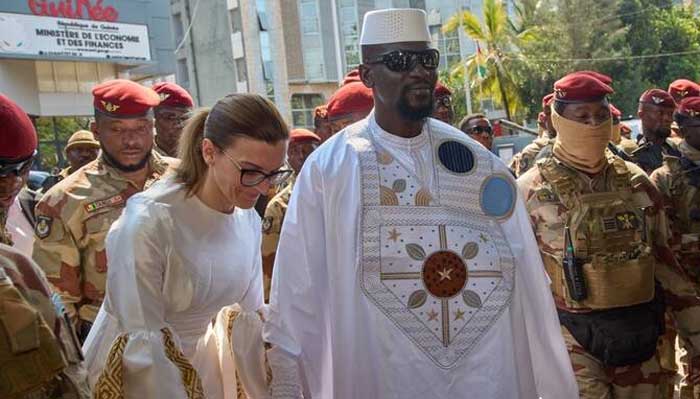
Guinea’s coup leader Mamady Doumbouya has been elected president, according to provisional results announced on Tuesday, marking the country’s return to civilian rule in the bauxite- and iron ore-rich West African nation.
The former special forces commander, believed to be in his early 40s, seized power in a 2021 coup that ousted then-president Alpha Condé, who had ruled since 2010. The takeover was part of a wave of nine coups that have reshaped politics across West and Central Africa since 2020.
Provisional results released on Tuesday showed Doumbouya winning 86.72 per cent of the December 28 vote — an absolute majority that spares him a second-round runoff. Guinea’s Supreme Court has eight days to validate the outcome if any challenges are filed.
Doumbouya’s victory, which grants him a seven-year mandate, had been widely anticipated. With Condé and longtime opposition leader Cellou Dalein Diallo living in exile, Doumbouya faced a fragmented field of eight challengers.
He had initially pledged not to run for office after the coup, and the transitional charter barred junta members from contesting elections. However, those restrictions were lifted under a new constitution approved in a September referendum.
Announcing the results late Tuesday, election commission chief Djenabou Touré said voter turnout stood at 80.95 per cent. Opposition figures, however, disputed the high participation rate, noting that turnout appeared low in the capital, Conakry, and had been similarly questioned during the September referendum.
Guinea holds the world’s largest bauxite reserves and one of the richest untapped iron ore deposits at Simandou, a project officially launched last month after years of delays. Doumbouya has claimed credit for advancing the development and ensuring greater national benefit from the resource.
His government has also embraced a more nationalist approach to natural resources, revoking the licence of Emirates Global Aluminium’s Guinea Alumina Corporation this year following a dispute over a refinery project and transferring the assets to a state-owned company. Similar policies in Mali, Burkina Faso and Niger have helped boost his popularity, along with his relative youth in a country where the median age is about 19.
Despite the electoral victory, political space has remained tightly controlled under Doumbouya’s rule. Civil society groups accuse his administration of banning protests, restricting press freedom and curbing opposition activities.
United Nations human rights chief Volker Türk said last week that the campaign period was “severely restricted,” citing intimidation of opposition figures, alleged politically motivated enforced disappearances and limits on media freedom.
Opposition candidate Faya Lansana Millimono echoed those concerns on Monday, alleging “systematic fraudulent practices” and claiming observers were blocked from monitoring the voting and counting process. The government did not respond to requests for comment.
Comments are closed.