
Jharkhand Launches India’s First Mining Tourism Initiative: A New Chapter in Industrial Heritage Travel

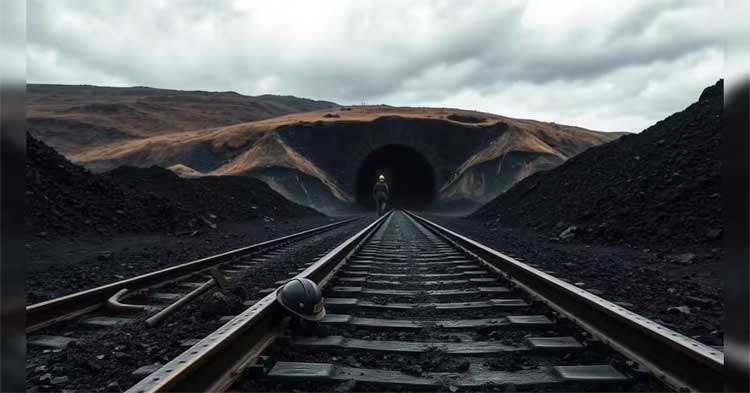
In a pioneering move set to redefine heritage travel, Jharkhand has launched the country’s first-ever mining tourism initiative. On July 21, 2025, Chief Minister Hemant Soren announced the ambitious program, which aims to showcase the state’s rich mining legacy while promoting education, employment, and sustainable tourism.
The initiative is a collaborative effort between the Jharkhand Tourism Development Corporation (JTDC) and Central Coalfields Limited (CCL), formalized through a five-year Memorandum of Understanding (MoU). It marks the first time a state has opened its mining sector to the public in an organized and experiential format.
“Jharkhand has always been known as a mining state,” said State Tourism Minister Sudivya Kumar. “With this step, we are making our industrial heritage accessible to tourists, students, and the common public.”
Global Inspiration, Local Vision
The idea reportedly took shape after CM Soren’s recent visit to the Gava Museum of Mines in Barcelona, where he explored Neolithic-era mining relics. Inspired by how other nations have turned industrial history into tourism gold, Jharkhand now seeks to do the same with its own resource-rich identity.
Accounting for nearly 40% of India’s mineral reserves, Jharkhand is uniquely positioned to lead this new frontier in eco-industrial tourism.
A Glimpse Into the Mining World
The initiative’s first phase will focus on the North Urimari open-cast mines in Ramgarh district, which will be developed as a model site. Under tight safety protocols, JTDC will organize guided group tours of 10–20 people. Visitors will be allowed to observe live mining operations from safe viewing zones, offering rare insight into excavation technologies, environmental management, and miners’ daily routines.
“This isn’t just tourism—it’s education, heritage, and experience,” said CCL Chairman and Managing Director Nilendu Kumar Singh. “More mines will be opened in future phases of the circuit.”
Tourism Beyond the Pits
The plan goes beyond mining. To enhance visitor experience, the circuit will incorporate nearby natural attractions such as Palani Falls, Patratu Valley, and Tiru Falls, blending industrial exploration with ecological beauty.
Additionally, the government plans to create three thematic tourism circuits:
-
Eco-Mining Circuit 1
-
Eco-Mining Circuit 2
-
Religious Mining Circuit
These will integrate mining heritage with local culture, religion, and environment, aiming to spur local economic development and cultural preservation.
Old Mines, New Purpose
Officials also confirmed that several abandoned or defunct mining sites are being assessed for redevelopment. These locations, with their historic significance, could serve as heritage tourism destinations in the future.
With this initiative, Jharkhand is not only highlighting its industrial roots but also pioneering a new model of tourism that is educational, inclusive, and economically viable.
“We’re turning our past into a powerful asset for the future,” a senior JTDC official said.
Jharkhand’s mining tourism is officially on the map—and it’s digging deeper than ever before.
Comments are closed.