
Japanese PM Ishiba Clings to Power After Coalition’s Upper House Defeat Amid Looming US Tariffs

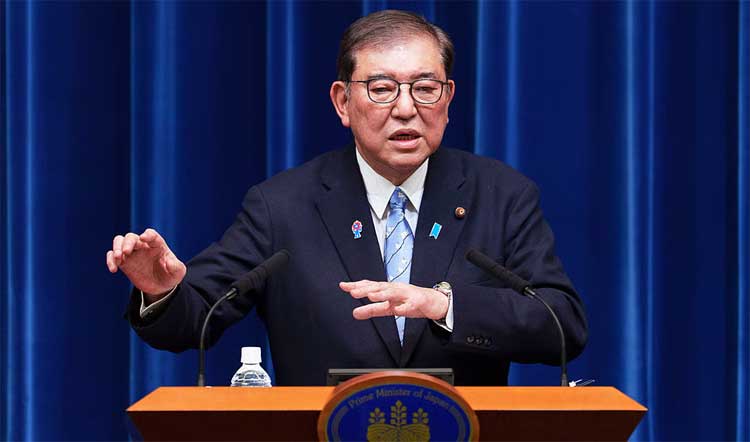
Japanese Prime Minister Shigeru Ishiba faced mounting pressure on Monday after his ruling coalition lost its majority in the upper house, just weeks before punishing new U.S. tariffs are set to take effect.
In Sunday’s election, Ishiba’s Liberal Democratic Party (LDP) and its junior partner Komeito needed 50 seats to retain their majority in the 248-seat chamber but fell short by three, according to national broadcaster NHK. The LDP won 39 seats, while Komeito secured just eight.
Public frustration over inflation, rising living costs, and political scandals appears to have fueled the shift in voter sentiment. Among the biggest gainers was the right-wing Sanseito party, which rode a wave of anti-globalist rhetoric and won 14 seats.
“I even think the LDP should have lost more,” said 25-year-old voter Kazuyo Nanasawa, who backed a small ultra-conservative party. “Ishiba should step down.”
The result marks a significant blow to the LDP, which had already lost its majority in the more powerful lower house earlier this year—its worst performance in 15 years.
Still, Ishiba signaled no intention to resign. “That’s right,” he said when asked if he planned to stay on. “The deadline of U.S. tariffs is coming on August 1. Until then we have to do our best with our body and soul.”
The looming tariffs — 25% duties on Japanese auto exports — are expected to hit Japan’s economy hard, especially its automobile industry, which accounts for 8% of national employment. The tariffs would come on top of existing 10% duties unless a trade deal is reached with the U.S., but talks have stalled despite Ishiba’s early outreach to President Donald Trump.
On Monday, Japan’s chief trade envoy Ryosei Akazawa departed for Washington on his eighth visit, insisting that the election outcome would not derail negotiations. “Japan’s national interest remains the top priority,” he said.
Political analysts say the fractured opposition is unlikely to form an alternative government, meaning Ishiba may cling to power but face difficult legislative gridlock. Hidehiro Yamamoto, a professor at the University of Tsukuba, said expanding the ruling coalition would be tough, with the centrist Democratic Party for the People (DPP) the only potential partner—on the condition of tax cuts or fiscal stimulus.
More realistically, Ishiba’s administration may have to strike ad hoc deals with opposition parties to pass key legislation. But that could come at a political cost, especially if he is forced to make concessions such as slashing Japan’s unpopular consumption tax—a move he has long resisted due to the country’s debt burden, now over 200% of GDP.
Voter frustration has also been stoked by surging food prices—rice, a staple, has doubled in cost since Russia’s invasion of Ukraine in 2022—despite government subsidies. Meanwhile, the LDP continues to be dogged by a campaign finance scandal that has further eroded public trust.
With the political landscape more fractured than ever and economic pressures mounting, Ishiba’s grip on power looks increasingly fragile—though no clear successor has yet emerged. As one elderly LDP supporter, Takeshi Nemoto, put it: “A leadership contest now would only weaken us further.”
Comments are closed.