
Japan Launches Climate Monitoring Satellite on Final H-2A Rocket Flight, Ushering in New Era with H3

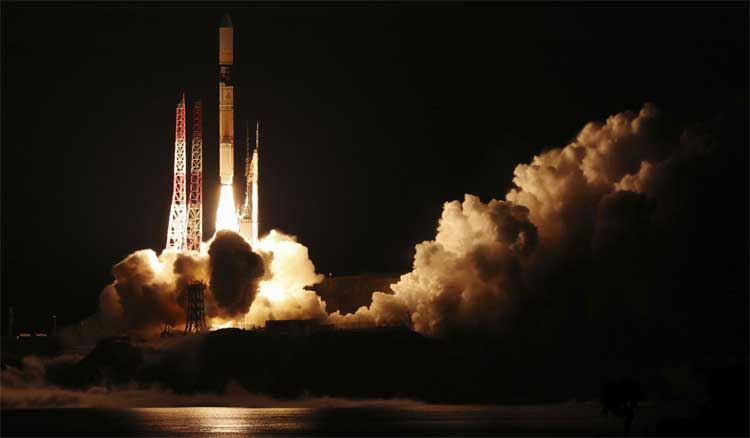
Japan successfully launched its GOSAT-GW climate monitoring satellite aboard the H-2A rocket on Sunday, June 29, 2025, marking the final mission of the country’s longstanding workhorse launcher. The H-2A lifted off from Tanegashima Space Center in southwestern Japan and deployed the satellite into orbit about 16 minutes later, following earlier delays caused by electrical issues.
This launch was the 50th and last for the H-2A, which has maintained a near-flawless record since its 2001 debut. Operated by Mitsubishi Heavy Industries, the H-2A had just one failure in 2003 and has played a critical role in Japan’s space ambitions, carrying major payloads like the SLIM moon lander and Hayabusa2 asteroid mission.
The GOSAT-GW (Global Observing Satellite for Greenhouse gases and Water cycle) is Japan’s third satellite in the GOSAT series. It will provide high-resolution global data on carbon dioxide, methane, precipitation, and sea surface temperature within a year of launch. The data will be shared globally, including with agencies like the U.S. National Oceanic and Atmospheric Administration.
With the retirement of the H-2A, Japan now shifts focus to its next-generation H3 rocket, designed to offer higher payload capacity at roughly half the cost. Despite a failed maiden flight in 2023, the H3 has since completed four successful missions and is poised to lead Japan’s efforts in the global commercial launch market, alongside the smaller Epsilon rocket system developed with IHI.
As Japan pursues greater competitiveness and reliability in space transportation, the H-2A leaves behind a legacy of excellence and paves the way for a new chapter in Japanese space exploration.
Comments are closed.