
Jaishankar Stresses Fairer Global Order Amid US Pressure on India’s Russian Oil Imports

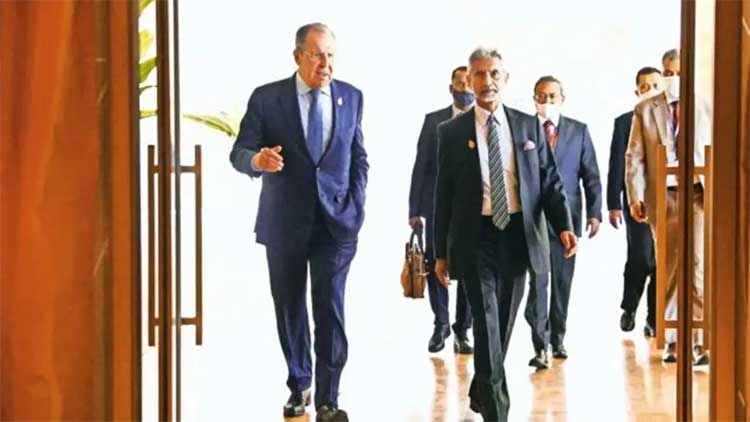
Amid escalating US pressure over India’s continued energy and defence ties with Russia, External Affairs Minister S. Jaishankar on Monday called for a “more equitable global order”, pushing back against what India sees as selective criticism and geopolitical double standards.
Speaking at the inaugural BIMSTEC Traditional Music Festival ‘Saptasur’ in New Delhi, Jaishankar said:
“We live in complicated and uncertain times, and a collective desire is to see a fair and representative global order, not one dominated by a few. That quest is often articulated as political or economic rebalancing.”
His remarks came hours after India issued a strong rebuttal to US President Donald Trump’s latest warning of higher tariffs in retaliation for India’s oil and defence purchases from Russia — calling the threats “unjustified and unreasonable.”
India Pushes Back on Western Targeting
Ministry of External Affairs spokesperson Randhir Jaiswal defended India’s position, criticising both the US and EU for selectively targeting India while maintaining their own channels of economic engagement with Moscow.
“In this background, the targeting of India is unjustified and unreasonable. Like any major economy, India will take all necessary measures to safeguard its national interests and economic security,” Jaiswal stated.
He pointed out that Western nations continue to trade with Russia — the EU through indirect goods and the US via civil nuclear imports — even as they seek to isolate Moscow diplomatically.
Jaiswal further reminded that India’s shift to Russian crude occurred only after traditional suppliers diverted shipments to Europe following the Ukraine conflict.
“At that time, the US actively encouraged such imports by India to support global energy market stability,” he noted.
Mounting Trade Pressure from West
This marks the second time Trump has threatened penalties over India’s energy ties with Russia. Just last week, the US announced a 25% reciprocal tariff on Indian goods, effective August 7, along with unspecified sanctions targeting India’s defence and energy sectors.
Meanwhile, the European Union’s latest sanctions package includes action against the Vadinar refinery in Gujarat, co-owned by Russia’s Rosneft, and bans the import of petroleum products made from Russian crude that are re-exported via third countries — a move that could significantly impact Indian exports to Europe.
A Broader Diplomatic Message
Jaishankar’s call for “political and economic rebalancing” aligns with India’s growing frustration at the West’s inconsistent standards on global trade, security, and climate policy — especially as tensions rise over issues like the EU’s Carbon Border Adjustment Mechanism (CBAM) and new WTO disputes.
The timing and tone of his remarks signal India’s resolve to assert strategic autonomy, defend its economic choices, and shape a more multipolar global order — especially within groupings like BIMSTEC and BRICS, where shared concerns about Western dominance are gaining traction.
Comments are closed.