
Italian Report Claims AI 171 Probe Points to Intentional Fuel Switch Action

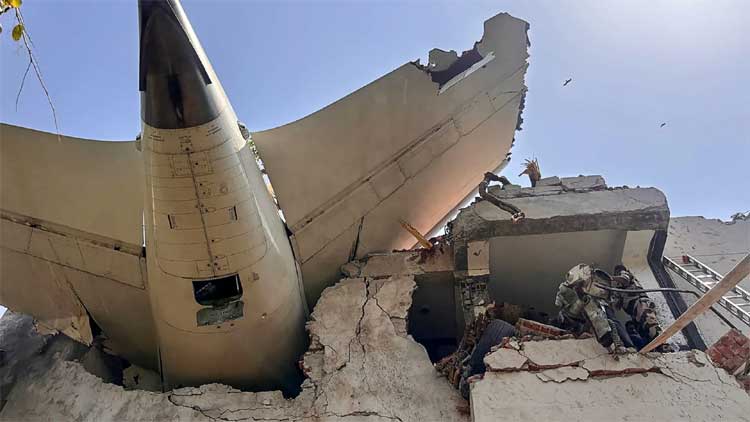
Indian investigators are preparing to conclude that the crash of Air India Flight 171 was caused by an “almost certainly” intentional action by one of the pilots, Italian daily Corriere della Sera reported on Wednesday, citing sources in Western aviation agencies.
According to the report, investigators found no evidence of a technical malfunction and based their assessment on analysis of cockpit voice recordings and flight data. The newspaper said cleaned-up audio helped determine which pilot moved the aircraft’s fuel switches.
India’s Aircraft Accident Investigation Bureau (AAIB) and the civil aviation ministry did not respond to requests for comment.
Flight 171, a Boeing 787 Dreamliner, crashed on June 12 shortly after takeoff from Ahmedabad, killing 260 people — 241 of the 242 passengers and crew on board, along with 19 people on the ground. The aircraft lost thrust from both engines and struck a medical student hostel roughly 32 seconds after takeoff.
While the final report’s precise wording remains unclear, Corriere said the primary focus of the investigation has shifted to the aircraft’s commander, Sumeet Sabharwal, who died in the crash.
The newspaper noted that the final document may stop short of explicitly assigning responsibility or detailing how the fuel switches were moved.
Pilots’ associations and Sabharwal’s family have previously criticised what they describe as attempts to attribute blame prematurely, calling for broader scrutiny of aircraft systems, airline procedures, and other factors.
Corriere also reported that US experts assisting the probe viewed the emerging conclusions as a significant development after weeks of reported disagreements with Indian counterparts over the role of human factors.
In December, AAIB officials travelled to Washington to re-examine black box data at National Transportation Safety Board (NTSB) laboratories, the newspaper said. The review reportedly focused on enhanced cockpit and cabin audio recordings.
Sources cited by the newspaper said the analysis clarified which pilot moved the switches and suggested the action was unlikely to have been accidental.
The report further claimed that international pressure influenced the direction of the findings, though these assertions could not be independently verified.
According to Corriere, simulator tests conducted by US investigators did not identify any technical failure scenario that would have caused both engines to shut down without human intervention.
The newspaper said flight data analysis indicated that Sabharwal was monitoring the flight while first officer Clive Kunder was flying. It reported that the engines shut down sequentially and that the first officer’s control inputs appeared consistent with attempts to regain altitude.
The preliminary report, released a month after the accident, stated that both engines lost power after fuel switches were moved from “run” to “cutoff.” It also recorded an exchange in which one pilot asked, “Why did you turn off the engines?” and the other replied, “It wasn’t me,” without identifying the speakers.
Corriere said the final conclusions would undergo further review and could be presented more cautiously to avoid controversy.
An NTSB spokesperson declined to comment, referring questions to Indian authorities. The AAIB and other Indian aviation bodies did not respond to the newspaper’s queries.
Comments are closed.