
Israel’s South Pars strike escalates tensions, rattles global energy markets

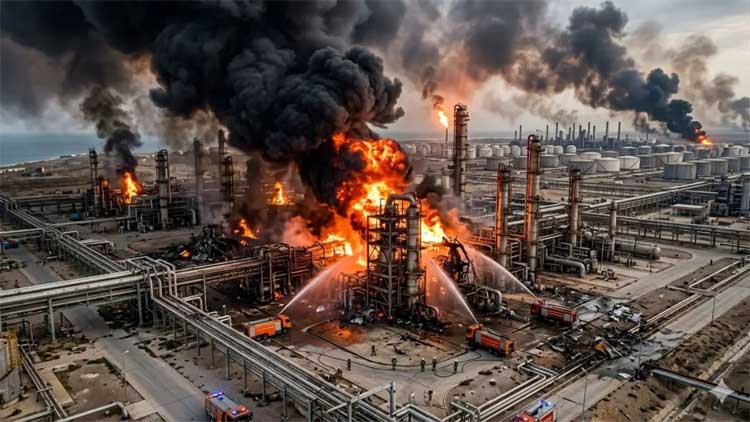
Israel’s strike on South Pars gas field—a critical energy hub for Iran—has sharply escalated an already volatile conflict, sending shockwaves through global energy markets.
Tehran retaliated by targeting energy infrastructure across West Asia, including a strike on Ras Laffan Industrial City in Qatar, pushing up oil and gas prices and raising concerns about supply disruptions worldwide.
The escalation has also exposed differences between Donald Trump and Benjamin Netanyahu over the attack, adding a geopolitical layer to the crisis.
What is South Pars and why it matters
The South Pars gas field—the world’s largest—lies off Iran’s coast near Asaluyeh and is shared with Qatar, where it is known as the North Field. Spanning roughly 9,700 sq km, it is the backbone of Iran’s domestic energy system.
Unlike many Gulf nations, Iran relies heavily on natural gas for electricity and heating. South Pars alone meets around 80% of the country’s gas demand, making it central to power generation and daily energy needs.
Iran is also among the world’s top gas consumers, and disruptions at South Pars can directly impact electricity supply, not just exports.
Iran’s retaliation: Why Ras Laffan is crucial
In response, Iran struck Ras Laffan—home to the world’s largest liquefied natural gas (LNG) production complex, located about 80 km from Doha.
The facility accounts for nearly 20% of global LNG supply, making it vital for energy markets in Asia and Europe. Repeated attacks and shutdowns have already disrupted output, with Qatar reportedly cutting exports significantly.
The damage could take years to fully repair, raising fears of prolonged supply shortages and sustained high prices.
Impact on India
For India, the developments are particularly concerning. The country imports over 88% of its crude oil and around half of its natural gas needs, with Qatar being a key supplier.
Qatar provides nearly one-third of India’s LPG imports and close to half of its LNG supplies. Any prolonged disruption at Ras Laffan could tighten supplies, push up prices and strain India’s energy security.
Trump-Netanyahu divide in focus
The South Pars strike has also highlighted differences between Trump and Netanyahu. Trump said he had advised against targeting the gas field, signalling discomfort with the move, even as the broader campaign remains coordinated.
Netanyahu later said Israel acted independently in the strike and agreed to avoid further attacks on the facility, attempting to downplay any rift.
With critical energy infrastructure now in the crosshairs, the conflict risks not just regional escalation but a prolonged global energy shock—one that could ripple across economies far beyond West Asia.
Comments are closed, but trackbacks and pingbacks are open.