
Israeli Push to Retain Gaza Corridor Threatens Ceasefire Talks with Hamas

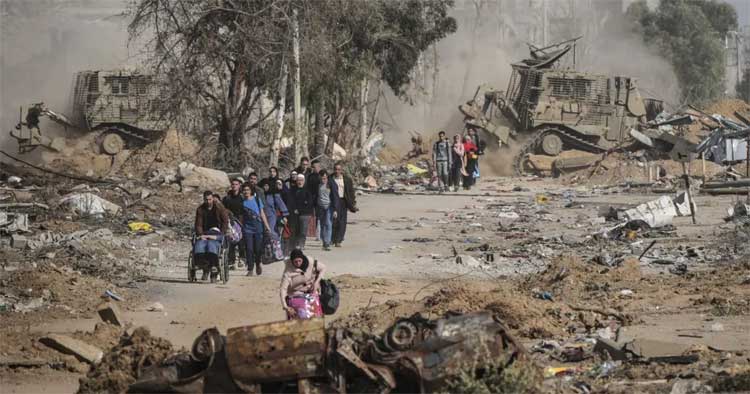
As Israel and Hamas edge closer to a ceasefire deal, a key Israeli demand — to maintain a military presence in southern Gaza’s Morag corridor — threatens to derail the fragile negotiations.
An Israeli official, speaking on condition of anonymity, said Israel wants to keep troops stationed in Gaza during the proposed 60-day truce, particularly along the Morag corridor, an east-west axis cutting through the southern Gaza Strip. The corridor, seized in April, spans 12 kilometers from the Israeli border to the Mediterranean and lies between the cities of Rafah and Khan Younis.
Israel argues the foothold is critical to its plan to move hundreds of thousands of Palestinians into what it calls a “humanitarian city” near Rafah — a strategy critics warn could amount to forced displacement.
Hamas, which still holds dozens of hostages, insists that any ceasefire must include a full Israeli withdrawal from Gaza. It has rejected the idea of any continued Israeli presence in the enclave.
The proposed truce would involve a 60-day pause in hostilities, partial hostage releases, and increased humanitarian aid. But Israel’s insistence on maintaining the Morag corridor echoes earlier demands that stalled ceasefire talks for months.
The office of Prime Minister Benjamin Netanyahu declined to comment on the issue. Netanyahu was in Washington this week for talks with U.S. President Donald Trump, who has been pressuring both sides to reach an agreement.
“We want to have peace. We want to get the hostages back. And I think we’re close to doing it,” Trump said Wednesday.
A White House official confirmed that Israeli troop presence in Gaza, including in Morag, was a point of contention discussed during meetings between U.S., Israeli, and Qatari officials.
Three Corridors Divide Gaza
The Morag corridor is one of three Israeli-controlled east-west corridors that now bisect Gaza. Alongside Morag is the Netzarim corridor in central Gaza, and the Philadelphi corridor along the Egypt-Gaza border. These routes allow Israel to control movement within Gaza and between its north and south.
Since the war began nearly two years ago, Israel has systematically depopulated areas like Rafah through evacuation orders and military operations. The military now aims to transform Rafah into a “sterile zone,” free of Hamas fighters, where displaced civilians can be relocated and screened — particularly through Morag.
Israel says this approach is necessary to prevent Hamas from regrouping or infiltrating civilian zones, and to minimize civilian casualties during operations in the north.
But critics argue the plan risks turning temporary displacement into permanent expulsion. Rafah has been devastated by months of fighting, and many displaced Palestinians already lack shelter, food, or basic services. Rights groups warn that concentrating the population in a devastated and undersupplied area could amount to coercive displacement.
“A No-Go for Hamas”
The Morag corridor has emerged as a symbol of Israel’s deeper ambitions in Gaza — and a possible deal-breaker.
“This corridor is critical for Israel’s population movement strategy,” said Kobi Michael, a senior fellow at the Institute for National Security Studies and Misgav. He argued it could enable Israel to fight in the north while minimizing civilian exposure.
But for Hamas, said Michael Milshtein, a former Israeli military intelligence officer, any Israeli presence in Gaza beyond the truce is unacceptable.
“For Hamas, it’s a no-go,” Milshtein said. “If those are the terms, I can’t see Hamas agreeing. It signals Israel is not planning to leave after the ceasefire.”
Hamas confirmed in a statement Wednesday that troop withdrawal remains one of several unresolved issues — though it did not mention Morag specifically.
As the sides inch toward agreement, the fate of a single corridor — and what it represents — could decide whether a ceasefire becomes reality or collapses once again.
Comments are closed.