
Israel Defends Recognition of Somaliland at UN Amid Concerns Over Gaza and Military Bases

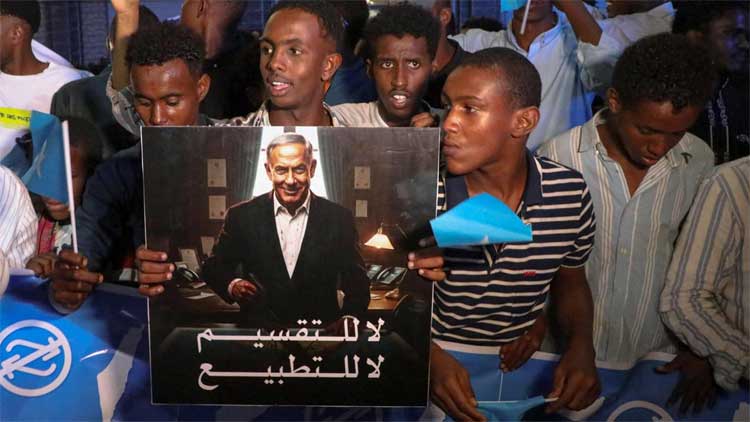
Israel on Monday defended its formal recognition of the self-declared Republic of Somaliland at the United Nations, even as several countries questioned whether the move was linked to plans to relocate Palestinians from Gaza or to establish military bases in the Horn of Africa.
Israel became the first country to recognise Somaliland as an independent and sovereign state on Friday, a move that triggered sharp reactions during a UN Security Council meeting.
The 22-member Arab League strongly criticised the decision, warning against any consequences that could affect Palestinians or regional security. Arab League UN Ambassador Maged Abdelfattah Abdelaziz said the organisation rejects “any measures arising from this illegitimate recognition aimed at facilitating forced displacement of the Palestinian people or exploiting northern Somali ports to establish military bases.”
Pakistan echoed those concerns. Deputy UN Ambassador Muhammad Usman Iqbal Jadoon told the council that Israel’s recognition of Somaliland was “deeply troubling,” especially in light of earlier references to Somaliland as a possible destination for Palestinians, particularly from Gaza.
Israel’s UN mission did not immediately respond to requests for comment on the allegations and did not directly address them during the council meeting. In March, however, the foreign ministers of Somalia and Somaliland said they had not received any proposal regarding the resettlement of Palestinians from Gaza.
The issue also comes amid wider debate over Gaza’s future. US President Donald Trump’s peace plan for Gaza states that “no one will be forced to leave Gaza, and those who wish to leave will be free to do so and free to return.” Still, Israel’s current coalition government — the most right-wing and religiously conservative in its history — includes far-right politicians who openly support the annexation of Gaza and the West Bank and encourage Palestinians to leave.
Somalia’s UN Ambassador Abukar Dahir Osman said council members Algeria, Guyana, Sierra Leone and Somalia “unequivocally reject any steps aimed at advancing this objective, including any attempt by Israel to relocate the Palestinian population from Gaza to the northwestern region of Somalia.”
Somaliland vs Palestinian State
Somaliland has enjoyed de facto autonomy and relative stability since 1991, when Somalia descended into civil war. Despite this, the breakaway region has failed to secure international recognition from any other country until now.
Defending Israel’s move, Deputy UN Ambassador Jonathan Miller said recognition of Somaliland was not intended as a hostile act toward Somalia. “It is not a hostile step toward Somalia, nor does it preclude future dialogue between the parties. Recognition is not an act of defiance. It is an opportunity,” he told the council.
The debate unfolded against a broader diplomatic backdrop. In September, several Western countries — including France, Britain, Canada and Australia — announced plans to recognise a Palestinian state, joining more than three-quarters of the UN’s 193 member states that already do so.
Deputy US Ambassador to the UN Tammy Bruce criticised the council’s focus, saying its “persistent double standards and misdirection of focus distract from its mission of maintaining international peace and security.” Slovenia’s UN Ambassador Samuel Zbogar disputed that view, arguing that Palestine is “illegally occupied territory” and an observer state at the UN, while Somaliland remains part of a UN member state. “Recognising it goes against the UN Charter,” he said.
Israel said last week it would seek immediate cooperation with Somaliland in sectors such as agriculture, health, technology and the economy. Somaliland, a former British protectorate, hopes Israel’s recognition will encourage other nations to follow suit, boosting its diplomatic standing and access to global markets.
Comments are closed.