
Israel Approves Trump-Backed Gaza Ceasefire, Hostage Release Plan

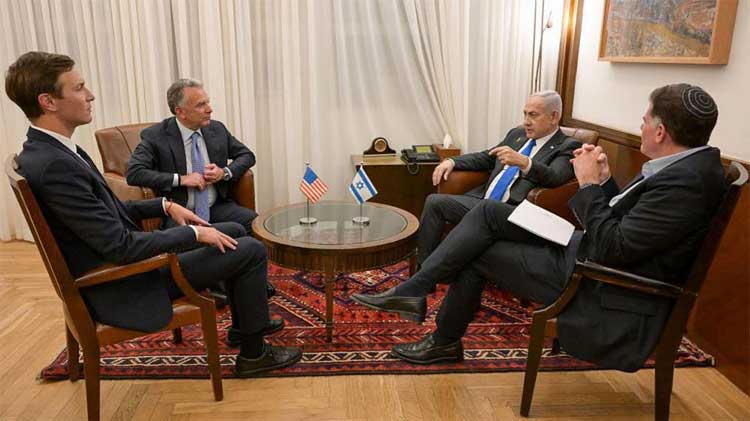
Israel’s Cabinet early Friday approved U.S. President Donald Trump’s ceasefire plan for the Gaza Strip and the release of all remaining hostages held by Hamas, marking a major step toward ending a devastating two-year war that has destabilized the Middle East.
A brief statement from Prime Minister Benjamin Netanyahu’s office confirmed that the Cabinet had endorsed the “outline” of the agreement focused on the hostages, without addressing more contentious elements of the broader plan.
The Trump peace proposal leaves key questions unresolved — including whether Hamas will disarm and who will govern Gaza postwar — but represents the most significant progress toward ending the conflict in months.
The war, which began with Hamas’ October 7, 2023 attack on Israel, has killed tens of thousands of Palestinians, displaced millions, and left Gaza’s infrastructure in ruins. Israel says Hamas killed about 1,200 people and took 251 hostages in its assault; Gaza’s Health Ministry reports over 67,000 Palestinians killed and nearly 170,000 wounded since Israel’s military offensive began.
In the hours before the Cabinet vote, Israeli airstrikes continued in Gaza. Blasts were reported in northern areas, and a strike on a Gaza City building killed at least two people and trapped dozens beneath rubble, according to the Palestinian Civil Defense.
Hamas negotiator Khalil Al-Hayya outlined key points of the ceasefire deal: Israel will release around 2,000 Palestinian prisoners, reopen the Rafah crossing with Egypt, allow humanitarian aid to flow freely, and withdraw its forces from Gaza. “We declare today that we have reached an agreement to end the war and aggression against our people,” Al-Hayya said in a televised address.
The United States plans to send about 200 troops to Israel to help monitor and support the ceasefire as part of an international team, U.S. officials said.
Celebrations were mixed with grief across the region. In Khan Younis, southern Gaza, residents expressed cautious relief. “We are happy but also sad,” said Mohammad Al-Farra. “We lost our homes and loved ones — and we don’t know what we’re returning to.” In Tel Aviv, families of hostages wept with joy after Trump announced the deal, while others gathered in Jerusalem to celebrate.
According to officials familiar with the agreement, Hamas will release all living hostages within days, while Israel begins a partial withdrawal from Gaza. About 20 of the 48 remaining hostages are believed to be alive. Trump told cheering families in a video call, “They are all coming back on Monday.”
The deal, expected to be signed in Egypt, includes detailed lists of prisoners to be released and maps marking the first phase of Israeli withdrawal. Victims of the prisoners’ attacks will have 24 hours to file objections once the list is published.
Under the Trump plan, Israel would maintain a limited military presence along its border with Gaza, while an international peacekeeping force — primarily from Arab and Muslim nations — takes over internal security. The U.S. would lead a massive, internationally funded reconstruction program, and the Palestinian Authority could eventually return to administer Gaza following internal reforms.
The proposal remains vague on the creation of a Palestinian state, which Netanyahu continues to oppose.
Politically, the ceasefire could reshape Netanyahu’s standing. Long embattled by corruption charges and reliant on far-right allies demanding total victory over Hamas, he now faces a new test balancing peace and political survival.
Trump, however, suggested the deal has boosted Netanyahu’s popularity: “He’s much more popular today than he was five days ago,” the U.S. president said. “Five days ago, running against him might not have been a bad idea — but not now.”
Comments are closed.