
Is the World Heading Toward World War III? A Reality Check in 2026

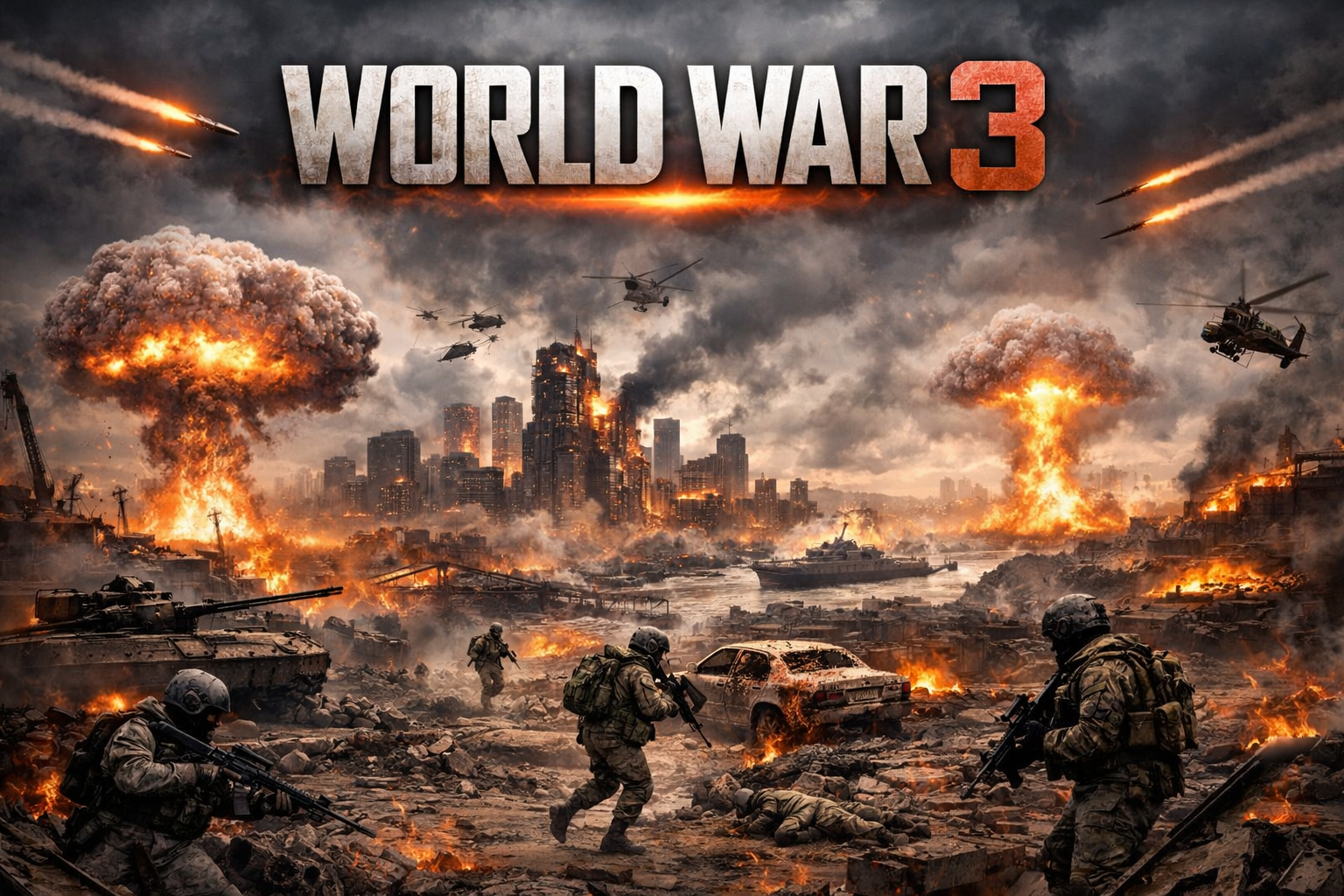
In recent months, global tensions have intensified, sparking a familiar and unsettling question: Are we on the brink of World War III? While the idea captures public imagination and media headlines, the reality is more complex—and less immediate—than it may seem.
Across key geopolitical regions, conflicts are simmering. The ongoing strain surrounding the Middle East, tensions linked to the Russia–Ukraine War, and rising friction over Taiwan have created an environment many analysts describe as unusually volatile. These are not isolated crises; rather, they are interconnected flashpoints that have the potential—under the wrong circumstances—to escalate.
However, it is crucial to distinguish between heightened tension and inevitable global war. Most geopolitical experts agree that while risks have increased, a full-scale world war remains unlikely in the immediate future. The primary reason lies in the structure of modern global power.
Unlike the early 20th century, today’s world is shaped by nuclear deterrence, a factor that fundamentally alters decision-making. The presence of nuclear weapons among major powers ensures that any direct large-scale conflict carries catastrophic consequences for all sides. This has led to a strategic preference for indirect engagement—through proxy wars, economic sanctions, cyber operations, and regional conflicts—rather than open warfare between global superpowers.
Another stabilizing force is economic interdependence. Major economies such as the United States, China, and Russia are deeply connected through trade, finance, and supply chains. A global war would not produce winners in the traditional sense; instead, it would trigger widespread economic collapse. This reality acts as a powerful deterrent against escalation.
That said, the current global climate is far from stable. The real danger lies not in deliberate plans for world war, but in miscalculation. History has shown that conflicts can spiral when communication breaks down, alliances are triggered, or actions are misinterpreted. In a world of rapid information flow and military readiness, the margin for error is thin.
Public perception also reflects this anxiety. Surveys and online discourse indicate a growing belief that a large-scale conflict could occur within the next decade. While such fears are understandable, they often amplify worst-case scenarios without accounting for the diplomatic, economic, and strategic safeguards that remain in place.
So, are we heading toward World War III? The answer, for now, is no—but the risks are not negligible. The world is navigating a period of heightened geopolitical competition, where tensions are real, stakes are high, and outcomes are uncertain.
The coming years will depend heavily on diplomacy, crisis management, and the ability of global powers to avoid escalation. Rather than a countdown to world war, the current situation is better understood as a test of international stability in an increasingly multipolar world.
Comments are closed.