
Iran’s Khamenei Reportedly Moves to Underground Shelter Amid Rising US Tensions

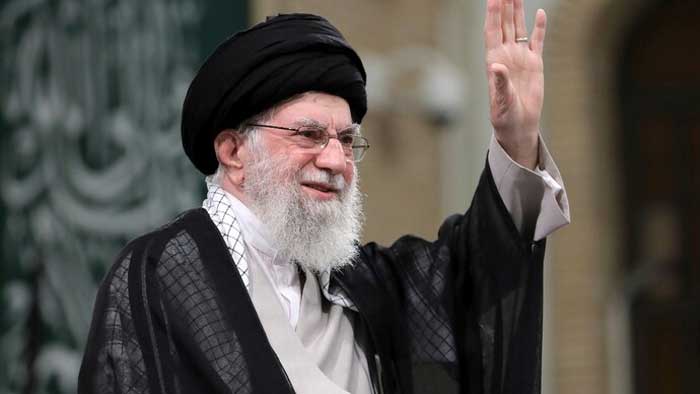
Iran’s Supreme Leader Ayatollah Ali Khamenei has reportedly relocated to a fortified underground shelter in Tehran following assessments by senior military and security officials of an increased risk of a possible US attack, according to two government-linked sources cited by Iran International.
The facility is described as a heavily reinforced complex connected by underground tunnels, designed to provide maximum protection during wartime emergencies.
The report said Khamenei’s third son, Masoud Khamenei, has taken over the day-to-day management of his father’s office and now serves as the main communication channel with Iran’s executive branches.
Trump’s ‘Big Force’ Warning
The development comes amid escalating tensions between Tehran and Washington after US President Donald Trump warned that an American naval “armada” was moving toward the Middle East.
Speaking aboard Air Force One, Trump said US warships were being deployed closer to the region “just in case” military action against Iran becomes necessary.
A US Navy official, speaking anonymously, confirmed that the aircraft carrier USS Abraham Lincoln and several guided-missile destroyers are currently operating in the Indian Ocean and are expected to reach the Middle East in the coming days.
Additional air defence systems are also being deployed, reportedly to protect US and Israeli airbases. Britain has announced it will send RAF Eurofighter Typhoon jets to Qatar at Doha’s request.
Iran Warns of ‘All-Out War’
In response, Iran’s Revolutionary Guard commander, General Mohammad Pakpour, warned that Iranian forces were “more ready than ever, finger on the trigger,” to carry out the supreme leader’s orders.
A senior Iranian official told Reuters that any US attack would be treated as “an all-out war,” with Iran responding “in the hardest way possible.”
Unrest and Crackdown
The military standoff follows weeks of widespread unrest inside Iran, sparked by economic hardship and a sharp decline in the value of the rial.
Protests that began in late December spread nationwide, leading to a major security crackdown and what activists described as the country’s longest and most extensive internet shutdown.
The US-based Human Rights Activists News Agency (HRANA) said at least 5,002 people had been killed, including 4,716 demonstrators, 43 children, and 40 civilians. Iranian authorities have not confirmed the figures.
HRANA also reported more than 26,500 arrests.
At an emergency session of the UN Human Rights Council in Geneva, UN High Commissioner for Human Rights Volker Turk urged Iran to end what he called “brutal repression” and raised concerns over forced confessions, summary trials, and lack of judicial transparency.
Iran Thanks India
Amid the standoff, Iran’s ambassador to India, Mohammad Fathali, thanked New Delhi for opposing a UN resolution calling for greater scrutiny of Iran’s human rights record.
He described India’s vote as “principled and firm,” particularly at a time of heightened Iran-US tensions.
Comments are closed.