
Iran, US Make Progress in Geneva Talks but Tensions Linger; Over 50 Fighter Jets Moved to Middle East

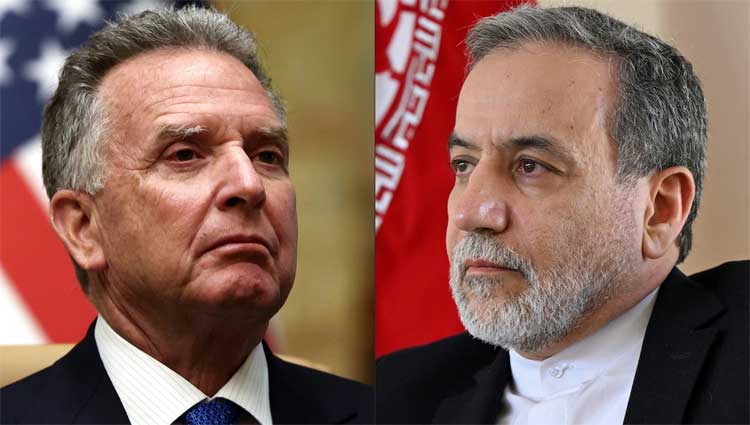
Iran and the United States held a second round of indirect talks in Geneva, Switzerland, on Tuesday, with both sides signalling cautious progress even as fresh military developments underscored lingering tensions between Tehran and Washington.
According to a report by Axios, the US military has reinforced its presence in the Middle East, moving more than 50 advanced fighter jets — including F-35s, F-22s, and F-16s — into the region over the past 24 hours. The deployment follows US President Donald Trump’s decision to send a second aircraft carrier, the USS Gerald R. Ford, to the area.
Geneva Talks Described as Constructive
Speaking after the discussions, Iranian Foreign Minister Abbas Araghchi characterised the talks as “serious, constructive and positive.”
“Various ideas were presented and discussed seriously. Ultimately, we were able to reach a general understanding on a set of guiding principles, on the basis of which we will move forward and begin working on the text of a potential agreement,” Araghchi said, according to Iranian state television.
He cautioned, however, that the developments do not guarantee a swift breakthrough. “This does not mean that we can reach an agreement quickly, but at least the path has begun,” he added.
A US official, when asked about the outcome, told Axios the talks proceeded “as expected,” offering a more restrained assessment.
Military Moves and Regional Signals
Amid the diplomatic engagement, security concerns remain prominent. The recent US air asset deployments add to Washington’s expanded military footprint in the Middle East.
Meanwhile, Iran announced a temporary, partial closure of the Strait of Hormuz, one of the world’s most critical oil transit routes. Media outlets affiliated with the Islamic Revolutionary Guard Corps (IRGC) said the measure was linked to naval exercises, with sections of the strait restricted for several hours.
Red Lines and Nuclear Concerns
US Vice President JD Vance suggested that significant disagreements persist.
“In some ways it went well — they agreed to meet afterwards — but it was very clear that the President has set some red lines that the Iranians are not yet willing to acknowledge and work through,” Vance told Fox News.
He reiterated that the US’ primary objective remains preventing Iran from acquiring a nuclear weapon — a longstanding point of contention in US-Iran relations.
Despite the reported progress in Geneva, the combination of ongoing military manoeuvres and unresolved policy differences highlights the fragile state of the diplomatic process.
Comments are closed.