
Iran negotiator says Tehran will administer Strait of Hormuz after talks, state media reports

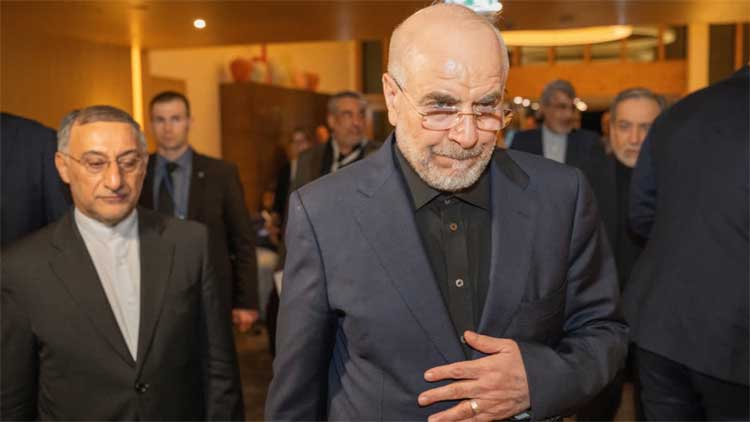
Iran’s chief negotiator Mohammad Bagher Ghalibaf said the Strait of Hormuz will be controlled by Tehran under international law, following talks aimed at ending the US-Israeli conflict with Iran, Iranian state media reported on Tuesday.
The statement came after Iran and the United States agreed on Monday to establish communication channels to prevent disruptions in the crucial shipping route and work toward ending fighting in Lebanon. The discussions, held in Switzerland, marked the first round of talks focused on reducing tensions across the Middle East.
“The Strait of Hormuz will never return to its pre-war conditions and will be administered by the Islamic Republic of Iran, in accordance with international law,” Ghalibaf said after returning from the negotiations, according to Iranian state news agency IRNA.
In a video shared on his Telegram account, Ghalibaf described the talks at the Swiss resort of Burgenstock as producing “good achievements,” highlighting discussions on the Strait of Hormuz, Lebanon, oil sanctions, and the release of frozen Iranian assets.
The United States temporarily eased sanctions on Iranian oil on Monday after Vice President JD Vance said Tehran had agreed to allow the return of UN nuclear inspectors. The arrangement also includes potential sanctions relief and the release of some frozen Iranian funds.
Ghalibaf said the process was only at the beginning and that further negotiations would be needed.
Iranian media reported that Ghalibaf also stopped in Oman, a country bordering the Strait of Hormuz. The strategic waterway, through which a significant share of global oil shipments passes, had been closed by Iran at the start of the war before reopening after an agreement between Washington and Tehran.
However, Tehran announced another closure on Saturday in response to Israeli strikes in Lebanon.
Since then, mediators from Qatar and Pakistan said Iran and the US had agreed to create a communication channel aimed at avoiding misunderstandings and ensuring the safe movement of commercial vessels through the strait.
Despite earlier tensions, maritime traffic through the waterway continued on Monday at a faster pace than before the US-Iran agreement to begin talks aimed at ending the conflict, according to shipping tracking firms.
Comments are closed.