
Iran Holds Massive State Funeral for IRGC Commanders and Nuclear Scientists Killed in Israeli Strikes

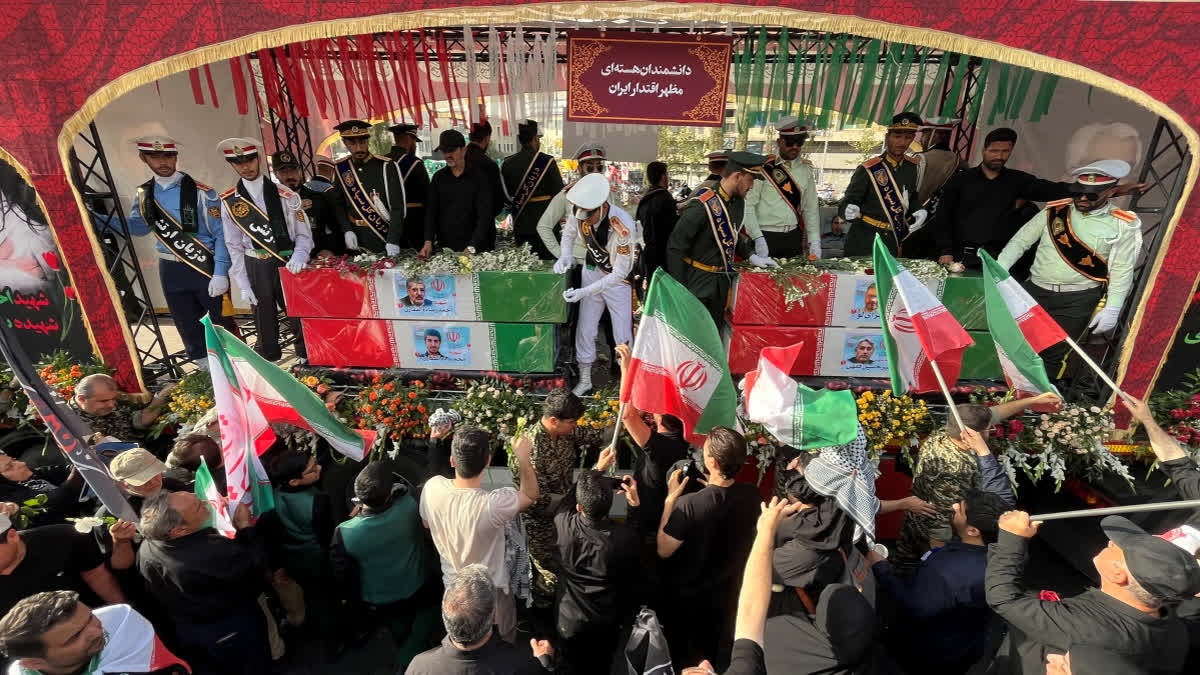
Iran has held an elaborate state funeral in Tehran for over 60 individuals, including top commanders of the Islamic Revolutionary Guard Corps (IRGC) and leading nuclear scientists, all of whom were killed in a 12-day military campaign conducted by Israel earlier this month. The mass funeral follows a ceasefire agreement that paused hostilities but left the region on edge.
Key Figures Among the Deceased
The funeral honored some of the most influential figures in Iran’s military and nuclear infrastructure, including:
-
Maj. Gen. Mohammad Bagheri, Chief of Staff of Iran’s Armed Forces
-
Gen. Hossein Salami, Commander-in-Chief of the IRGC
-
Gen. Amir Ali Hajizadeh, head of IRGC Aerospace Forces
-
At least 16 senior nuclear scientists, including names reported to be instrumental in uranium enrichment and missile systems development
These individuals were killed in precision Israeli airstrikes that began on June 13 during what has been described as the most intense military escalation between the two countries in years.
The Procession: A National Display of Grief and Defiance
The event, titled the “Martyrs of Power” procession, took place in central Tehran beginning at Azadi Square. Eyewitnesses estimated hundreds of thousands, possibly over a million, people lining the 4.5-kilometer procession route.
-
Coffins were draped with Iranian flags and carried through tightly packed crowds.
-
Slogans such as “Death to Israel” and “Death to America” were repeatedly chanted.
-
Military trucks displayed surface-to-surface ballistic missiles to symbolize resistance.
-
Top Iranian officials, including President Masoud Pezeshkian and Foreign Minister Abbas Araghchi, were present.
-
Supreme Leader Ayatollah Ali Khamenei did not appear in person but sent a pre-recorded message vowing retaliation and calling the fallen “victorious martyrs.”
Casualty Toll and Context
Iranian sources reported over 600 deaths and nearly 5,000 injuries during the conflict, with civilian casualties including women and children. Israel, in turn, reported 28 deaths and over 3,200 injuries due to Iranian missile retaliation.
This confrontation was sparked by Israeli airstrikes targeting Iran’s military command and nuclear infrastructure in what has been called “Operation Rising Lion.” Iran responded with a massive barrage of over 550 ballistic missiles, the majority of which were intercepted by Israel’s missile defense systems.
The ceasefire came into effect after intense international mediation, though both countries continue to prepare for possible future escalations.
Strategic and Diplomatic Fallout
The funeral was not just a moment of national mourning—it served as a political statement and a rallying cry. Iranian authorities used the opportunity to reinforce national unity and project resilience.
Key developments in the aftermath include:
-
Iran halting cooperation with the International Atomic Energy Agency (IAEA) as a form of protest against perceived Western complicity.
-
The status of Iran’s nuclear facilities remains unclear, though major sites like Natanz and Fordow were reportedly damaged.
-
Diplomatic tensions remain high, with both Iran and Israel accusing each other of planning further attacks.
The mass funeral of Iran’s top military and scientific personnel underscores the immense human and strategic cost of the latest round of hostilities between Tehran and Tel Aviv. While the ceasefire offers a momentary pause in violence, the underlying rivalries, mutual distrust, and regional implications suggest that the road ahead remains fraught with danger. As the world watches, Iran mourns—and prepares.
Comments are closed.