

In a landmark achievement in public welfare, India has extended social security coverage to over 940 million citizens (64.3% of its population) — a monumental leap from just 19% in 2015. This expansion represents one of the most significant social governance transformations globally, redefining the role of the Indian state in inclusive development.
Landmark Coverage Growth (2015–2025)
-
Social security coverage increased from 19% in 2015 to 64.3% in 2025.
-
Between 2021 and 2024, coverage nearly doubled from 24.4% to 48.8%.
-
The current achievement ranks India among the top countries in ILO’s global social protection index.
Key Drivers of the Expansion
-
Labour Code Reforms: The codification of 29 laws into four Labour Codes enabled streamlined wage systems, portability of benefits, and broader access to entitlements.
-
National Welfare Schemes:
-
Ayushman Bharat – PMJAY: Health insurance reaching over 399 million low-income beneficiaries.
-
PMGKAY (Free Ration Scheme): Food security for more than 800 million people during and post-pandemic.
-
e-Shram Portal: Registration of 306 million unorganised workers to facilitate benefit delivery.
-
Atal Pension Yojana: Over 72.5 million enrollments securing post-retirement incomes.
-
Remaining Gaps and Future Challenges
Despite notable gains, challenges persist:
-
Unorganised Workforce: Millions still remain uncovered due to mobility, lack of documentation, or awareness.
-
Fiscal Constraints: India’s social protection spending hovers around 5% of GDP, significantly lower than the global average of 13%.
-
Administrative Fragmentation: A need for convergence across schemes to prevent exclusion and duplication.
Innovations and Governance Improvements
-
Gig and Platform Economy Inclusion:
-
Karnataka’s model of levying a 1–5% welfare cess on aggregators is being studied for replication.
-
The Code on Social Security (2020) formally brings gig and unorganised workers under social security protections.
-
-
Digital Infrastructure:
-
Enhanced integration of e-Shram, Aadhaar, and DBT platforms enables more efficient targeting and monitoring.
-
Microsites, mobile apps, and grievance redress systems are helping bridge the digital divide.
-
Spotlight: Odisha’s Holistic Welfare Model
Odisha’s government has pioneered integrated complexes for senior citizens and persons with disabilities, providing care, housing, and rehabilitation under a public-private-NGO model. These centres are financially supported by an annual grant of ₹2.1 crore and are viewed as replicable models for ageing states.
Strategic Vision: Toward Universal Social Protection
-
The government aims to cross 60% comprehensive coverage by September 2025, with long-term goals of near-universal access.
-
India’s programs align with UN Sustainable Development Goals, specifically those related to poverty reduction, decent work, and reduced inequalities.
-
Plans are underway to integrate ESIC hospitals with primary health centres and PMJAY to improve healthcare convergence.
Expert Perspective
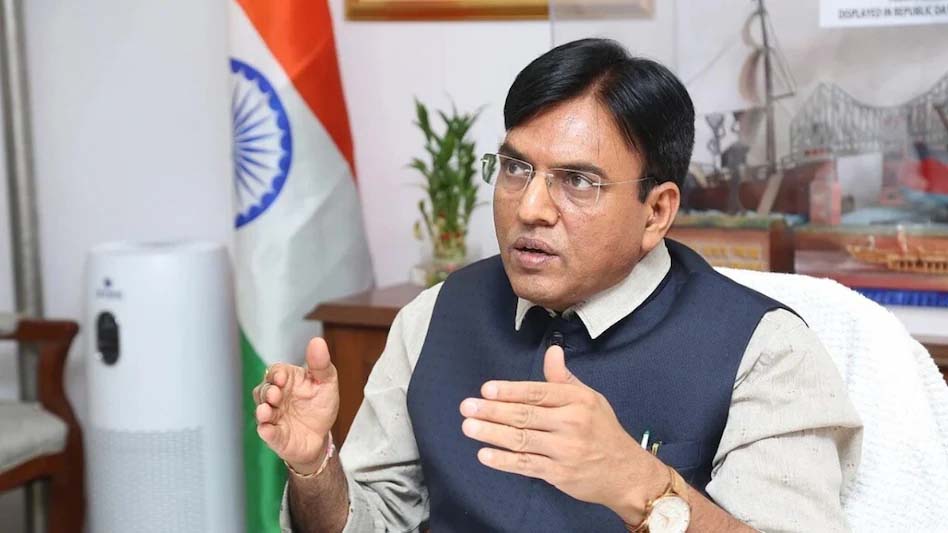
Union Minister Mansukh Mandaviya stated:
“Social security remains a fundamental pillar of social justice… Coverage increased from 24.4% in 2021 to 48.8% in 2024.”
Gilbert Houngbo, Director-General of the International Labour Organization, hailed India’s model as a benchmark for developing economies.
Comments are closed.