
India Unveils ₹40,000 Crore Incentive Plan to Boost Shipbreaking and Shipbuilding

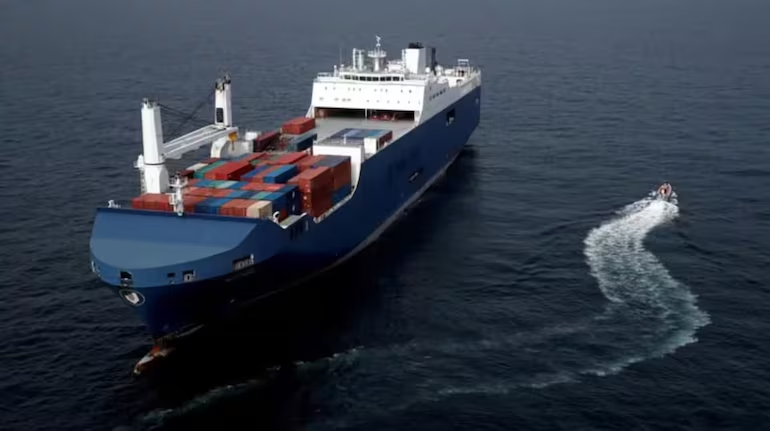
The Government of India is set to inject ₹40,000 crore in incentives aimed at reviving the long-neglected shipbreaking industry.
As part of its latest policy framework under the Union Budget 2025-26, this bold move is designed to integrate ship recycling more closely with domestic shipbuilding, reduce dependency on foreign vessels, and promote a circular economy.
What’s in the Incentive Package
-
A new Shipbreaking Credit Note Scheme will reward fleet owners who dismantle ships at Indian breaking yards. They will receive credit notes equal to 40% of the scrap value of the vessel, which can then be redeemed against the cost of building new ships in India.
-
Customs and duty exemptions on inputs related to shipbreaking and shipbuilding (raw materials, components, etc.) will be extended for another 10 years to improve competitiveness.
-
The Shipbuilding Financial Assistance Policy (SBFAP 2.0) will offer direct subsidies: ~20% for standard vessels, ~25% for specialized ships (tankers, container ships, etc.), and ~30% for green or technologically advanced vessels.
-
A Maritime Development Fund worth about ₹25,000 crore will support infrastructure, shipbuilding, repair yards, and the shipbreaking ecosystem.
Why the Push Now
-
Circular Economy and Sustainability
Recycling ships yields valuable steel and other materials, reducing demand for virgin raw materials. Promoting shipbreaking supports sustainable metal reuse and lowers environmental footprint. -
Strategic Industrial Growth
India contributes a very small share to global shipbuilding. These incentives aim to change that by strengthening both ship recycling and new ship construction, with the long-term vision of making India a leading shipbuilding nation by 2047. -
Economic & Employment Gains
Shipbreaking and shipbuilding clusters can generate large-scale employment, particularly in coastal regions like Gujarat (Alang) and other shipyard hubs. It also ensures value retention within the country instead of exporting old ships abroad for dismantling. -
Reducing Import Dependence
India currently depends heavily on foreign fleets and shipyards. This policy shift is intended to reduce that reliance by fostering a stronger domestic maritime ecosystem.
Challenges & Risks
-
Environmental Hazards: Shipbreaking is inherently hazardous, with risks such as asbestos, heavy metals, oil leakage, and toxic waste. Strong safeguards are necessary.
-
Worker Safety & Skills: Much of the current shipbreaking sector relies on informal labor with limited safety measures. Better training and regulation will be crucial.
-
Infrastructure & Capacity: Shipbreaking yards will require significant upgrades in tooling, waste management, and dock facilities to meet future demand.
-
Global Standards: To attract international fleet owners, Indian yards must comply with global certifications for safety, labor, and environmental standards.
What It Means Going Forward
-
Major hubs like Alang in Gujarat are expected to see a surge in activity as credit incentives roll out.
-
New shipyards and repair clusters may emerge, fueled by infrastructure funding and subsidies.
-
Scrap and steel markets will benefit from increased domestic supply, potentially lowering steel production costs.
-
Regulators will face pressure to ensure environmental compliance and worker safety as the industry scales.
India’s ₹40,000 crore incentive program marks a strategic push to transform its shipbreaking and shipbuilding industries. By combining financial support with policy reforms, the government aims to revive a sector that can deliver economic growth, job creation, and sustainable development. The real test will be balancing industrial expansion with environmental protection and labor welfare. If successful, India could position itself as a global leader in maritime recycling and ship construction.
Comments are closed.