
India to make statement at UN summit

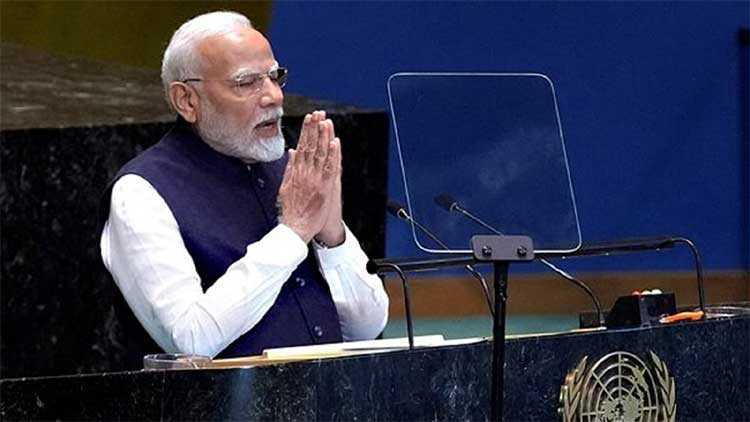
India will be making a statement on ocean protection at the Third UN Ocean Conference (UNOC 3) in France’s Nice between June 9 and 13, according to officials.
India is presently reviewing the UNOC 3 final declaration that is expected to be adopted at Nice. The text of the declaration was already negotiated in New York in May. It is expected to emphasise the particular importance of implementing the United Nations Framework Convention on Climate Change and the Paris Agreement including the goal to limit the temperature increase to well below 2°C above pre-industrial levels and to pursue efforts to limit the temperature increase to 1.5°C, recognizing that this would significantly reduce the risks and impacts of climate change, and help ensure the health, productivity, sustainable use and resilience of the ocean and thus common future. It is likely to address sea level rise, plastic pollution and biodiversity loss among others.
India will be participating in several panels but the most important ones for it are those on scientific cooperation and sharing of oceanographic data; marine pollution from land; and impacts of biodiversity loss and climate change on the ocean. The Indian delegation will be led by Jitendra Singh, minister of state for earth sciences. Scientists from Ministry of Earth Sciences will also attend.
As part of the statement, India will also be calling attention to sea level rise. “Sea level rise is a very critical issue for tropical countries including India. Apart from sea level rise contributed by melting of glaciers, melting of sea ice in the poles, here sea level rise is contributed by thermal expansion due to global warming. It’s a grave threat to populous low lying coastal areas,” said M Ravichandran, secretary, ministry of earth sciences.
India will also be participating in a side event with Norway on June 8 to demonstrate marine spatial planning. “Though our partnership with Norway we have conducted marine spatial planning for Puducherry and Lakshadweep. It is a very important project because it tells us where new industry, township, aquaculture farm, ports or any infrastructure can come up in these coastal regions. This spatial planning can help other countries too because it is about judicious use of land and ocean,” added Ravichandran.
Comments are closed.