
India Summons Bangladesh Envoy, Lodges Strong Protest Over Security Threats to Mission in Dhaka

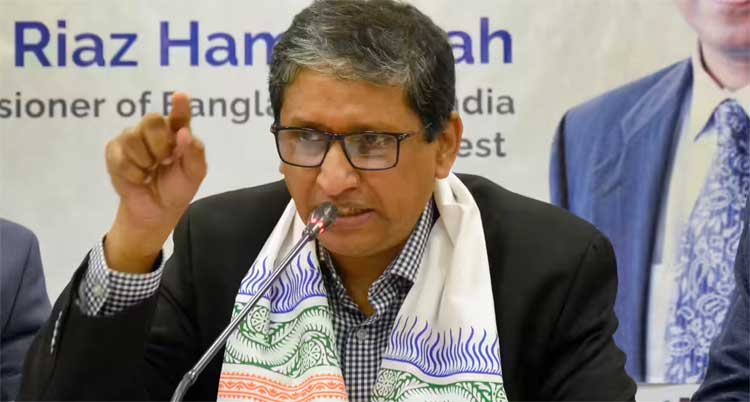
India on Wednesday summoned Bangladesh High Commissioner Riaz Hamidullah and lodged a strong protest over the deteriorating security situation in Bangladesh, particularly concerns over activities by extremist elements that could threaten the safety of the Indian High Commission in Dhaka.
According to people familiar with the matter, extremist groups have announced plans in recent days to stage protests around the Indian mission, prompting serious concern in New Delhi.
Hamidullah was summoned by B Shyam, Joint Secretary in charge of the Bangladesh–Myanmar division at the Ministry of External Affairs (MEA), and was served a demarche — a formal diplomatic communication. The MEA conveyed India’s “strong concerns at the deteriorating security environment in Bangladesh” and flagged the activities of extremist elements planning to create a security situation around the Indian mission.
“We expect the interim government to ensure the safety of missions and posts in Bangladesh in keeping with its diplomatic obligations,” the MEA said in an official readout.
Trigger: Controversial speech by NCP leader
One of the key triggers for summoning the Bangladeshi envoy was a controversial speech delivered on Monday by National Citizen Party (NCP) leader Hasnat Abdullah. Speaking at an event organised by Inqilab Mancha in Dhaka, Abdullah claimed that Bangladesh could shelter separatist forces from India and “sever” the country’s seven northeastern states.
Abdullah is among the prominent student leaders who led protests against former prime minister Sheikh Hasina.
In an apparent reference to such remarks, the MEA rejected what it described as a “false narrative sought to be created by extremist elements regarding certain recent events in Bangladesh”.
Protests near Indian mission stopped
Meanwhile, Bangladeshi police on Wednesday stopped a group of protesters marching towards the Indian High Commission in Dhaka’s Gulshan area. According to The Daily Star, the protesters were demanding the return of deposed prime minister Sheikh Hasina and others who fled during and after last year’s July uprising.
India reiterated that it supports peace and stability in Bangladesh and has “consistently called for free, fair, inclusive and credible elections conducted in a peaceful atmosphere”.
Strained ties and concerns over extremism
India-Bangladesh relations have sharply deteriorated over the past year, with New Delhi repeatedly criticising the caretaker administration for failing to address attacks on minorities, including Hindus, and for its inability to curb the resurgence of radical and extremist forces.
Tensions have also been heightened by the shooting of NCP leader Sharif Osman Hadi, who was left in critical condition after being attacked by unidentified gunmen on December 12.
Some NCP leaders, including Nahid Islam, have hinted at an Indian connection to the attack without providing evidence — an allegation repeated by Hasnat Abdullah in his speech.
“Those who are creating chaos and terror in our country, those who tried to kill Hadi… are being given refuge and support by India,” Abdullah claimed, warning that Bangladesh could retaliate by backing separatist forces in India’s northeast.
The MEA dismissed these allegations, noting that the interim government in Bangladesh has neither conducted a thorough investigation nor shared any credible evidence with India regarding the incidents.
India stressed that ensuring the security of diplomatic missions is a core international obligation and conveyed its expectation that Dhaka would take immediate and effective steps to prevent any threats to the Indian mission.
Comments are closed.