
India Pakistan news Live: BSF destroys terrorist launch pad in Sialkot’s Looni in Pak

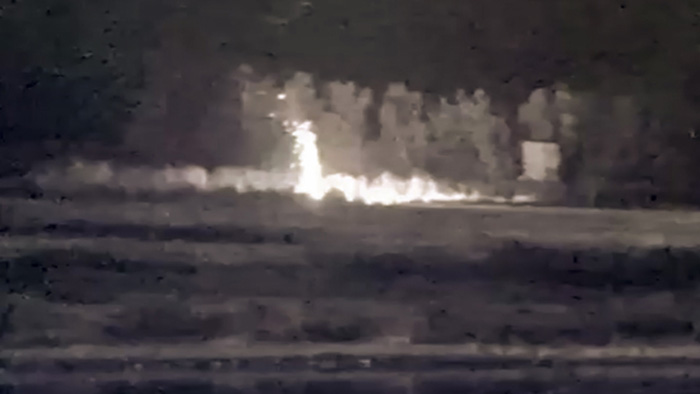
The Indian Armed Forces on Sunday shared details of Operation Sindoor, which was launched on May 7 to strike terrorist infrastructure in Pakistan-occupied Jammu and Kashmir (PoK) and Punjab province in Pakistan.
During the briefing, the military revealed that around 35 to 40 Pakistani Army personnel were killed in artillery and small arms fire exchanges along the Line of Control between May 7 and 10.
They also confirmed that the precision strikes successfully targeted F-16 airbases, training centres, air defence units, and command hubs along Pakistan’s western front.
India on Sunday said that Operation Sindoor is ongoing, marking a new approach in India’s response to cross-border terrorism. Following the May 7 strikes on terror infrastructure in Pakistan-controlled areas, India’s position is clear: if Pakistan fires, India will respond more forcefully; if Pakistan stops, India will stop, sources told Hindustan Times.
Any talks with Pakistan will be exclusively through the DGMOs, with no other issues up for discussion, sources added.
Prime Minister Narendra Modi chaired a high level meeting with defence minister Rajnath Singh, external affairs minister S Jaishankar and tri-services chiefs at his residence in New Delhi on Sunday. The meeting came a day after India and Pakistan reached a ceasefire after four days of military conflict. National Security Advisor Ajit Doval and Chief of Defence Staff General Anil Chauhan were also present at the meeting.
After attending the meeting, Rajnath Singh vitually inaugurated the BrahMos Aerospace Integration and Testing Facility in Lucknow from New Delhi. During the inaugural ceremony, Rajnath Singh said, “Operation Sindoor is not just a military action—it is a symbol of India’s political, social, and strategic willpower. This operation reflects India’s firm resolve against terrorism, and showcases the capability and determination of its military power. We have shown that whenever India acts against terrorism, even territory across the border will not be safe for terrorists and their handlers.”
The border shared by India and Pakistan, particularly in Jammu, will remain on high alert despite the ceasefire, said officials on Saturday. The BSF officials said that they will remain on high alert across India-Pak border in view of the infiltration attempts by terrorists from Pakistan-based Jaish-e-Mohammed lately.
Hours after violating the ceasefire with India, Pakistan Prime Minister Shehbaz Sharif vouched for a “path of peaceful negotiations” to solve the longstanding issues such as sharing of water resources, and the Kashmir issue between India and Pakistan. During his address on Saturday night, Sharif also thanked his coalition partners and opposition for demonstrating “exemplary” unity during the last four days as military conflict between India and Pakistan escalated, reported PTI.
The situation in several cities across Jammu and Kashmir seemed normal on Sunday morning after no firing or shelling was reported overnight. Visuals from cities such as Akhnoor, Jammu, Poonch, Rajouri and others show people going about their day as they woke up to no firing after four days.
On Saturday, hours after India and Pakistan agreed upon ceasing all hostilities across land, air, and sea on Saturday, Pakistan carried out multiple ceasefire violations. Drones were sighted in several areas of Jammu and Kashmir on Saturday night, followed by the sound of explosions.
Reacting to the ceasefire violations, Misri asked Pakistan to deal with the situation with “seriousness” and “responsibility”.
“We call upon Pakistan to take appropriate steps to address these violations and deal with the situation with seriousness and responsibility. The armed forces are maintaining a strong vigil on the situation. They have been given instructions to deal strongly with any instances of repetition of the violations of the border along the International Border as well as the Line of Control,” he said.
The ceasefire was agreed upon after Pakistan’s Director General of Military Operations reached out to the Indian DGMO at 15:35 hours (3.35 pm) on Saturday and both of them agreed that firing and military operations would come to a halt by 17.00 hours (5.00 pm).
Earlier during the wee hours of Saturday, the Indian Air Force struck eight military sites in Pakistan, including radar units and ammunition dumps, in response to the Pakistan military’s attacks on Indian military bases and civilian areas.
India-Pakistan tensions | Key points
The ceasefire between India and Pakistan was first announced by United States President Donald Trump.
While the ceasefire understanding between India and Pakistan has been reached, all other measures against Pakistan will remain including visa curbs. The Indus Waters Treaty will also remain under abeyance.
Jammu and Kashmir chief minister Omar Abdullah on Saturday announced an ex-gratia of ₹10 lakh each for the families of those who lost their lives in Pakistani shelling in the region.
Prime Minister Narendra Modi on Saturday held a meeting at his residence at Lok Kalyan Marg, with the chiefs of all three defence services, NSA Ajit Doval, CDS General Anil Chauhan, and defence minister Rajnath Singh.
Following the ceasefire violations by Pakistan, complete blackouts were imposed in several cities across states of Jammu and Kashmir, Punjab, Rajasthan, and Gujarat.
The recent military conflict between India and Pakistan comes after India avenged the deaths of 26 people who died in the terror attack in Kashmir’s Pahalgam on April 22.
India launched ‘Operation Sindoor’ on May 7 and struck nine terror posts in Pakistan and Pakistan occupied Kashmir (PoK) through precision strikes.
Comments are closed.