
India invokes Essential Commodities Act amid energy crisis triggered by West Asia war

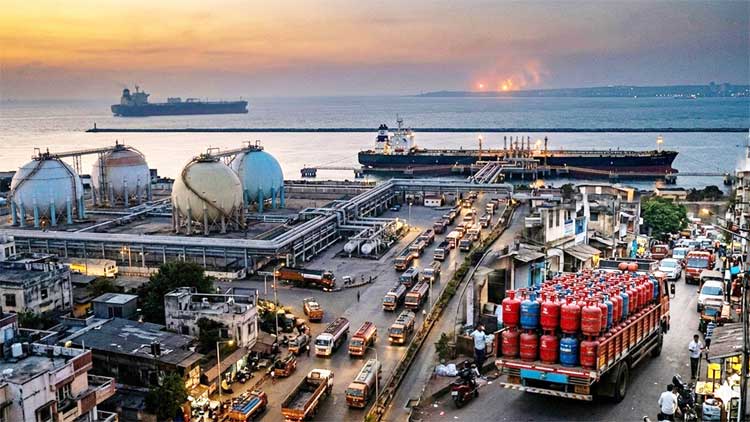
Amid a deepening global energy crisis linked to the conflict in West Asia, the Indian government has invoked the Essential Commodities Act, mandating all entities in the oil and gas sector to submit detailed operational data to the Petroleum Planning and Analysis Cell (PPAC), officials said.
The move designates PPAC as the nodal agency for collecting, compiling and analysing near real-time data across the petroleum and natural gas ecosystem—covering production, refining, storage, transportation, imports, exports and distribution. The enhanced powers are aimed at enabling faster policy responses and contingency planning during supply disruptions.
While PPAC already tracks sectoral data, the new notification strengthens its authority to demand granular, time-sensitive information. Any violation of orders issued under the Act can invite criminal penalties, including imprisonment.
The decision comes as the war in West Asia disrupts global energy flows, particularly shipments through key routes such as the Strait of Hormuz, impacting supplies of liquefied natural gas (LNG) and LPG.
Despite the turbulence, the government has sought to reassure consumers. Officials said crude supplies remain adequate, refineries are operating at full capacity, and there have been no reports of fuel shortages at petrol pumps. Supplies of piped natural gas (PNG) and compressed natural gas (CNG) are being maintained at 100% for priority users.
To manage demand, authorities are encouraging commercial LPG users to shift to PNG where possible. In the past two weeks, around 125,000 new PNG connections have been rolled out, with thousands of LPG consumers switching fuels in recent days.
India’s heavy dependence on imports—particularly from Gulf countries—has heightened concerns. A significant share of its natural gas and LPG imports comes from the region, leaving it vulnerable to disruptions triggered by attacks on energy infrastructure.
The government has also stepped up enforcement to prevent hoarding and black marketing, with states activating control rooms and intensifying inspections. Increased adoption of online booking and delivery authentication systems has helped reduce panic buying, officials said.
Overall, the measures reflect a shift toward tighter monitoring and control of energy supplies, as India navigates the economic fallout of a volatile geopolitical crisis.
Comments are closed, but trackbacks and pingbacks are open.