
India gears up for COP30: Environment Minister Bhupender Yadav heads to Brazil for pre-summit talks

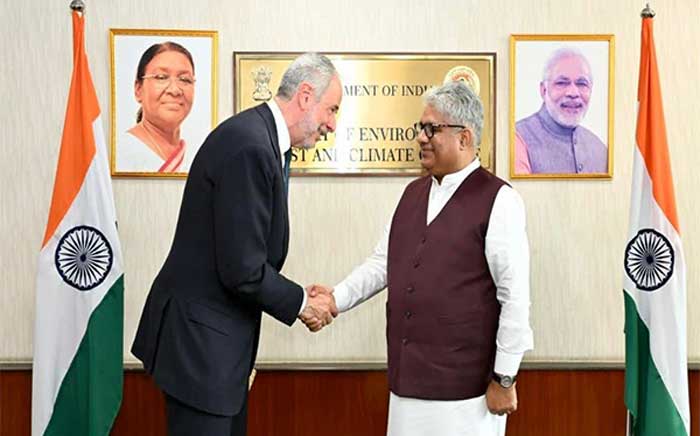
With India set to submit its updated climate action pledge ahead of the UN climate summit (COP30) next month, Union Environment Minister Bhupender Yadav left for Brazil on Saturday to attend a pre-COP meeting in Brasilia on October 13-14. The meeting will provide a platform for India to outline its expectations from the main conference.
During the pre-COP discussions, Yadav is expected to:
-
Advocate for the Global South’s demand for more predictable climate finance.
-
Highlight the importance of adaptation strategies.
-
Address the functioning of the global carbon market.
India has repeatedly emphasized that the $300 billion annual financial support pledged by developed countries to the Global South by 2035 is insufficient. The country insists that developed nations have a moral responsibility to support developing countries in implementing their climate action commitments. Last year at COP29 in Baku, developed countries agreed to mobilize $300 billion annually—far below the $1.3 trillion target proposed by developing nations.
Following the Brazil trip, Yadav will attend the G20 working group ministerial on climate and environmental sustainability in Cape Town, South Africa, on October 16-17, where he is expected to set the tone for COP30, scheduled in Belem, Brazil, from November 10 to 21.
An official said:
“India is expected to submit its National Adaptation Plan and updated Nationally Determined Contribution (NDC)—its climate action plan for 2035—ahead of COP30.”
The National Adaptation Plan will serve as a blueprint to integrate adaptation into national development policies across sectors like agriculture, water resources, the Himalayas, coastal regions, health, and disaster management, aiming to build resilience and reduce vulnerability to climate risks.
The updated NDC will outline India’s greenhouse gas reduction targets and set goals for enhancing electricity generation from non-fossil fuel sources by 2035, extending the current plans which run up to 2030.
Comments are closed.