
In Antarctica, Life Persists as Climate Change Risks Mount in a Remote Frontier

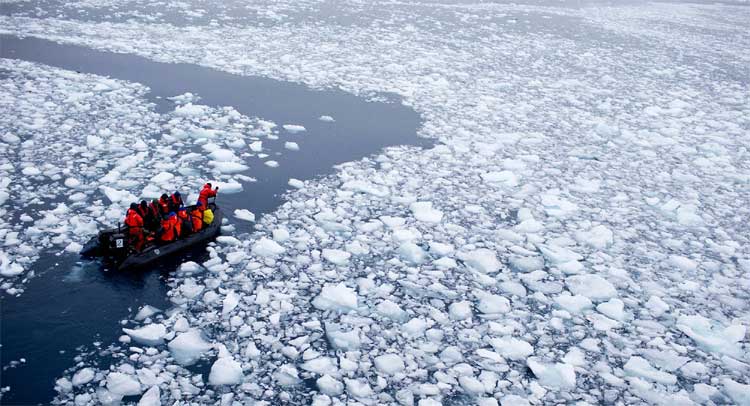
The Southern Ocean is among the most remote places on Earth, but it is far from quiet. Towering waves capable of swallowing ships crash relentlessly around the Antarctic Peninsula, creating a constant oceanic roar. At first glance, the landscape appears serene — deep blue waters framed by blinding white ice — but the calm is deceptive.
A few hundred metres off the coast, a small boat carrying several dozen tourists in bright red jackets cuts through the water. Binoculars raised, they scan the horizon for orcas, seals and penguins that inhabit this frozen wilderness.
The vessel is navigating the Lemaire Channel, nicknamed the “Kodak Gap” for its dramatic cliffs and sculpted ice formations. This narrow passage offers visitors a front-row view of what is at stake as climate change — driven largely by the burning of oil, gas and coal — continues to push global temperatures higher.
The Antarctic Peninsula is one of the fastest-warming regions on the planet. The surrounding Southern Ocean also plays a crucial role in absorbing carbon dioxide, capturing and storing nearly 40 per cent of human-caused CO₂ emissions, according to the US National Oceanic and Atmospheric Administration.
On a recent day, gentoo penguins — identifiable by their orange beaks and white eye patches — appeared almost theatrical as they surfaced from icy dives to nest on exposed rock. As temperatures rise, gentoos are migrating farther south, thriving in open water and rocky terrain that allow their populations to expand.
Adélie penguins, however, face a far bleaker future. Stockier and less adaptable, they depend heavily on sea ice for resting and evading predators. Warming waters threaten their food supply, and scientists estimate that by 2100, nearly 60 per cent of Adélie colonies around Antarctica could be at risk. Between 2002 and 2020, Antarctica lost an average of 149 billion metric tonnes of ice annually, according to NASA.
For tourists, Antarctica remains a vast, glacial expanse inhabited by a limited range of hardy species. In the notoriously rough Drake Passage, visitors watch in awe as orca whales slice through churning waters and pintado petrels glide overhead.
But the continent’s breathtaking scenery may look starkly different in the decades ahead. Expanding gentoo populations, shrinking ice shelves and increasing stretches of exposed rock across the Antarctic Peninsula all point to a rapidly changing landscape — and a fragile future for Earth’s southernmost frontier.
Comments are closed.