
Human-Driven Biodiversity Loss and Land Degradation Are Disrupting the Climate System, UN Report Warns

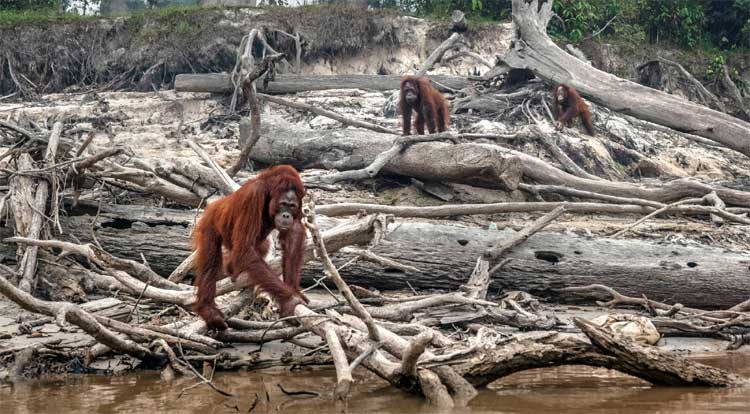
Loss of biodiversity and widespread land degradation caused by human activity are increasingly destabilising the climate system, creating feedback loops that accelerate further ecological damage, according to the latest Global Environment Outlook report by the UN Environment Programme (UNEP).
The Global Environment Outlook-7 (GEO-7), published on December 9, 2025, finds that biodiversity loss affects the climate primarily by altering nitrogen, carbon and water cycles. For instance, rising atmospheric carbon dioxide linked to deforestation has increased water-use efficiency in boreal forests, but ecosystems are responding unevenly to these pressures, adopting adaptive strategies with mixed and sometimes harmful outcomes.
While overall net carbon emissions from deforestation and land degradation have remained broadly stable over the past two decades, the report flags serious warning signs in the Amazon rainforest — the world’s largest tropical forest and a crucial global carbon sink. Deforestation, rising temperatures and increasing moisture stress are pushing parts of the Amazon towards decline, particularly in eastern regions during the dry season.
“An estimated 10 to 47 per cent of the Amazon’s forests are exposed to a combination of warming temperatures, extreme droughts, deforestation and wildfires,” the report said, warning that crossing critical ecological tipping points could trigger irreversible ecosystem shifts and worsen regional climate change.
The report also highlights weakening land-based carbon sinks elsewhere. In south-east Asia, models show the region’s net carbon sink nearly drops to zero between October and December. Globally, extreme heat in 2023 is estimated to have caused a gross carbon loss of 1.73 gigatonnes across terrestrial ecosystems, signalling a substantial decline in the ability of land systems to absorb carbon.
Changes in land cover are also altering the Earth’s reflectivity, or albedo. Darker forest surfaces absorb more heat, creating positive radiative forcing that can offset the cooling benefits of carbon sequestration. As a result, reducing deforestation in high-latitude regions could, in some cases, paradoxically increase warming.
Soils emerge as a critical yet vulnerable component of climate regulation. GEO-7 notes that global soil carbon stocks are more than three times larger than the combined carbon stored in the atmosphere and biosphere, with the potential to sequester nearly 2,500 gigatonnes of carbon dioxide. However, land-use change, fossil fuel use and biomass burning are disrupting soil carbon reserves and long-term ecosystem services.
Soil-related emissions contribute an estimated 6.8 to 7.9 gigatonnes of carbon dioxide equivalent annually, largely from methane released by peatlands and rice cultivation, nitrous oxide from soils, and carbon dioxide from land-use change. Indonesia, China and Russia together account for around 31 per cent of global peatland-related emissions. Mangrove loss and declining organic carbon levels are also linked to rising emissions.
The report underscores how climate change and invasive species are compounding biodiversity loss. Invasive species have now been detected in terrestrial and freshwater ecosystems in the Antarctic and Southern Ocean, where about 13 per cent of species are considered locally invasive. Shifts in species distribution are also evident elsewhere, such as the eastward movement of Himalayan birch across the Himalayas, alongside population declines in the west.
Air pollution further exacerbates ecological stress. Tropospheric ozone damages vegetation and reduces species diversity, with ozone levels exceeding forest protection thresholds across 59 per cent of forested areas in European Environment Agency member countries in 2020.
The impacts extend to cryospheric regions as well. Rising temperatures are reducing snowfall and accelerating snowmelt, exposing vegetation and wildlife to ultraviolet radiation earlier in the year. The deposition of black carbon on snow-covered mountains further hastens melting by absorbing solar radiation, reinforcing another dangerous climate–ecosystem feedback loop.
Together, the findings paint a stark picture of tightly linked climate and ecological crises, driven largely by human activity, with mounting risks of irreversible change if current trends continue.
Comments are closed.