
How India’s Operation Sindoor Forced Pakistan to Amend Its Constitution

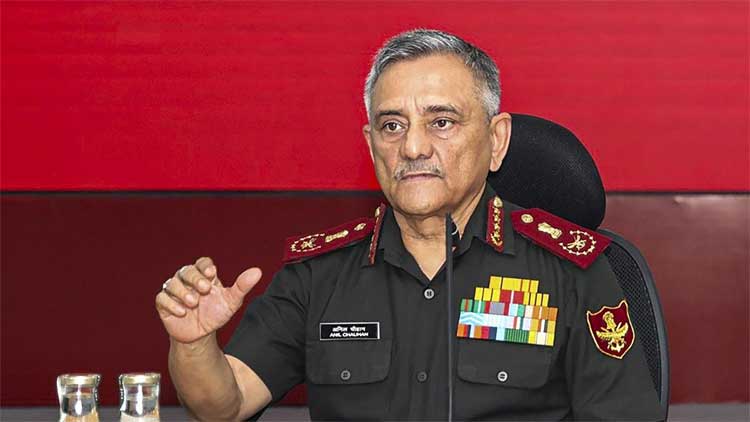
India’s Operation Sindoor compelled Pakistan to rush through constitutional amendments and overhaul its top defence structure, a move that underscored how the operation failed to go in Islamabad’s favour, Chief of Defence Staff (CDS) General Anil Chauhan said on Friday.
Operation Sindoor was carried out on May 7 last year, when India conducted precision strikes on terror infrastructure in Pakistan and Pakistan-occupied Kashmir in retaliation for the April 22 Pahalgam terror attack that killed 26 civilians.
Speaking at the Pune Public Policy Festival 2026 at the Gokhale Institute of Politics and Economics (GIPE), General Chauhan said Pakistan’s post-operation actions—particularly changes to its military leadership framework—revealed serious structural weaknesses exposed during the four-day conflict, as earlier reported by Hindustan Times.
General Chauhan pointed to amendments made to Article 243 of Pakistan’s Constitution, which governs the relationship between the civilian government and the armed forces. He said the changes led to a sweeping reorganisation of Pakistan’s higher defence command.
As part of the amendment, Pakistan abolished the post of Chairman of the Joint Chiefs of Staff Committee and replaced it with a Chief of Defence Forces (CDF). It also created a National Strategy Command and an Army Rocket Forces Command, significantly reshaping its military hierarchy.
Under the revised framework, Field Marshal Asim Munir—who has served as Pakistan’s army chief since November 2022—was given charge of the navy and the air force as well. The amendment also grants him lifetime immunity from arrest and prosecution, a move that critics warn could push the country towards greater autocracy.
“These steps have resulted in land, joint and strategic military authority being concentrated in the hands of a single individual,” General Chauhan said.
“Today, the Army Chief will be responsible for land operations, joint operations with the Navy and Air Force through the Chief of Defence Forces, as well as strategic and nuclear matters. The creation of the Rocket Forces Command adds another important layer. This, in some ways, reflects a land-centric mindset,” he was quoted as saying by news agency PTI.
India and Pakistan eventually reached an understanding on May 10 to halt hostilities, bringing an end to four days of intense cross-border drone and missile attacks.
Comments are closed.