
How India’s Heat–Power Crisis Took Centre Stage at COP30

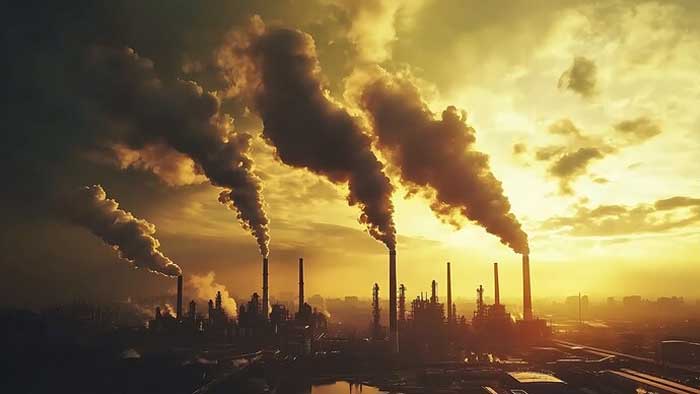
As negotiators at COP30 in Belém, Brazil, spent the opening week warning that extreme heat is pushing fast-growing economies into an energy-security trap, a new analysis released on the summit’s sidelines sharpened the focus on India. The report shows how rising temperatures, intensifying heatwaves and fossil-dependent electricity systems are now feeding into one another.
The study, “Breaking the Cycle”, maps trends from 2015–2024 and highlights a clear surge in both temperatures and peak power loads. India’s annual mean temperature touched 25.74°C in 2024, the hottest year on record, registering 0.65°C above the 1991–2020 average. Peak heat sharply raised cooling demand, driving up electricity use and emissions.
During April–June 2024, heatwaves alone added nearly 9% to the country’s power demand, pushing summer emissions to 327 MtCO₂. Over the past decade, fossil-based summer consumption generated 2.5 GtCO₂, underscoring the scale of the challenge.
Heatwaves intensified across 14 states, with the study noting a 15% rise in summer heat intensity between 2015 and 2024. Central and eastern states like Madhya Pradesh and Jharkhand faced an average of 50 heatwave days annually. Even the Himalayan belt—once considered heat-resilient—saw sharp increases: Uttarakhand jumped from zero heatwave days in 2023 to 25 in 2024, while its summer temperatures rose 11.2%. Ladakh saw a 9.1% rise.
Northern and central India routinely crossed 45°C at summer peak. Delhi and Rajasthan breached 50°C multiple times, with Mungeshpur touching 52.9°C in 2024. India’s warming trajectory mirrors the global rise of 0.62°C above the long-term baseline.
A GRID STRETCHED THIN
Electricity demand climbed rapidly over the decade, with peak load rising from 154 GW in 2015 to 246 GW in 2024—a jump of almost 60%. Cooling loads, especially AC use, are doubling summer peaks in several states.
Despite strong growth in solar and wind, the power system still leans heavily on fossil fuels during extreme heat. Coal-based generation rose by over 50% between 2015 and 2024, even though renewable energy expanded faster. Seasonal variations often mean that renewable output dips during peak heat, pushing states back to coal.
India’s renewable energy share in installed capacity improved from ~30% in 2015 to ~46% in 2024, while fossil fuels fell from ~69% to ~53%. Yet rising demand keeps coal central to reliability. Installed coal capacity grew from 170 GW to 219 GW (up 29%) over the decade, though annual additions slowed post-2020. Oil and gas capacity stayed flat at ~25 GW. Nuclear power rose modestly from 5.8 GW to 8.2 GW, with its share slipping from 3% to 2%.
This mismatch triggered sharp summer emission spikes. Bihar and Assam saw some of the steepest annual increases, while Uttar Pradesh, Maharashtra and Madhya Pradesh emerged as major emission hotspots during heat peaks.
At COP30, India argued that this heat-driven surge reflects a wider Global South trend—one where rising temperatures trap countries into fossil-heavy backup systems. Negotiators from the African Group and AOSIS cited India’s findings to stress that adaptation and energy transition can no longer be treated separately.
Aarti Khosla, director of Climate Trends, called the combined challenge of heatwaves and power shortages “a dual crisis that requires a structural reset”, warning that without storage, smart grids and rapid renewable expansion, “every summer will lock us deeper into fossil dependence.”
Dr Manish Ram, CEO of Climate Compatible Futures, noted: “Meeting the summer power surge with fossil fuels has fuelled emissions and air pollution, worsening climate and health risks. Breaking this cycle is essential to protect financially vulnerable communities who bear the brunt of extreme heat.”
POLICY GAPS PERSIST
The report also reviewed Heat Action Plans (HAPs) across states, cities and districts. Most plans still focus on health advisories and emergency action, with limited integration of electricity planning. Only four states, three cities and one district incorporate renewable-powered backups or battery systems into their HAPs—a key gap highlighted repeatedly at COP30.
Indian researchers and climate advocates are now pushing for:
-
Large-scale storage investments to align renewable supply with summer peaks
-
Smart grid upgrades to reduce coal dependence during heatwaves
-
Demand-response programmes to flatten industrial and urban peaks
-
Cooling-focused urban design such as cool roofs and solar-cooled shelters
-
Rural microgrids and community cooling hubs for vulnerable populations
At COP30, India’s experience became a touchstone for a global dilemma: how to keep people safe and economies running as extreme heat reshapes electricity systems and energy security worldwide.
Comments are closed.