
How climate change is putting human rights at risk

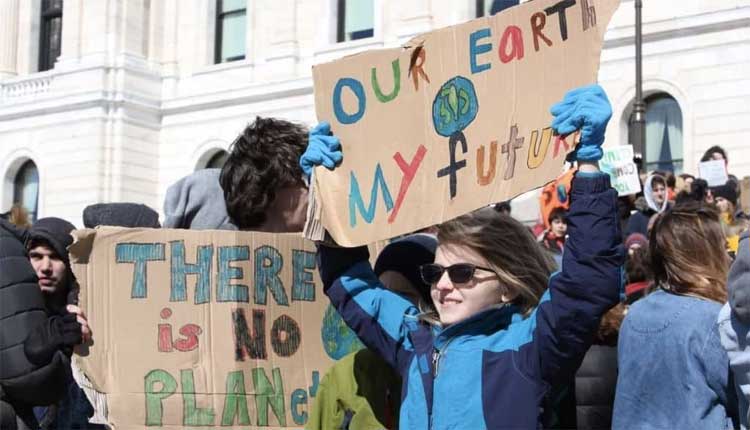
UN High Commissioner for Human Rights Volker Türk earlier this year posed a stark question before the Human Rights Council in Geneva: are governments doing enough to protect people from climate chaos, safeguard future generations, and manage natural resources in ways that respect human rights?
His own answer was blunt — they are not.
Climate change must be viewed not only as an environmental emergency but also as a human rights crisis, Professor Joyeeta Gupta told UN News recently. Gupta is co-chair of the international scientific advisory body Earth Commission and a UN high-level representative for science, technology and innovation for the Sustainable Development Goals.
Who suffers the most
Gupta noted that the 1992 climate convention never quantified the harm climate change would cause to people. When the Paris Agreement was adopted in 2015, countries agreed to limit global warming to 2 degrees Celsius, later recognising 1.5 degrees as a safer target.
For small island states, however, even this was a compromise driven by global power imbalances. “For them, two degrees was not survivable,” Gupta said, warning that rising sea levels, saltwater intrusion and extreme storms threaten to wipe entire nations off the map.
She explained that after wealthier countries demanded scientific evidence, the Intergovernmental Panel on Climate Change (IPCC) studied the difference between 1.5 degrees and 2 degrees of warming. The findings showed that while 1.5 degrees is significantly less destructive, it still carries severe risks.
In research published in Nature, Gupta argues that one degree Celsius should be considered the just boundary. Beyond that threshold, she said, climate impacts begin violating the rights of more than one per cent of the global population — roughly 100 million people.
The world crossed the one-degree mark in 2017 and is likely to breach 1.5 degrees by 2030, she warned. Gupta stressed that promises of cooling later in the century overlook irreversible damage already underway, including melting glaciers, collapsing ecosystems and loss of life.
“If Himalayan glaciers melt,” she said, “they won’t come back. We will be living with the consequences forever.”
Comments are closed.