
Historic Ruling: Inter-American Court Declares Climate Crisis a Human Rights Emergency

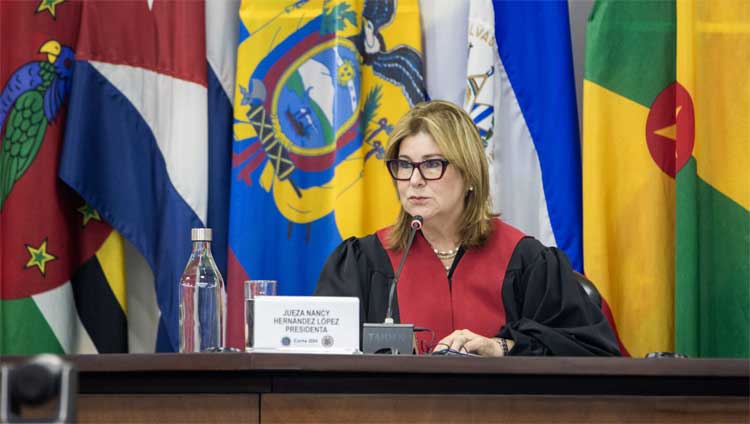
On July 3, 2025, the Inter-American Court of Human Rights (IACtHR) issued a groundbreaking advisory opinion that redefines how international law and human rights intersect with the climate emergency. In a move hailed as a historic legal milestone, the court clarified how states’ existing obligations must apply urgently and comprehensively in the face of accelerating climate change.
This 234-page advisory opinion has been described by legal scholars as “the most important and progressive document yet released by an international court on the climate crisis.” Its implications are likely to influence not only Latin America, but also global approaches to environmental law and human rights.
🔥 Declaring a Climate Emergency with Legal Force
In a clear and forceful tone, the court stated:
“This climate emergency can only be adequately addressed through urgent and effective actions, articulated with a human rights perspective and under the prism of resilience.”
The opinion emphasizes that climate inaction is no longer simply a policy failure—it is a violation of fundamental legal and moral obligations.
🛡️ Climate Protection as Jus Cogens: A Legal Breakthrough
The centerpiece of the opinion is the recognition that the duty to prevent irreversible environmental and climate harm now constitutes a jus cogens norm—a peremptory principle of international law that is absolute, non-derogable, and binding on all states regardless of consent.
This ruling places climate and environmental protection on the same legal pedestal as the prohibitions against genocide, slavery, torture, and crimes against humanity.
In effect, anthropogenic activities that cause irreversible damage to ecosystems are now seen as violations of international law at the highest level.
🌍 Human Rights and the Environment: An Unbreakable Link
The court affirmed that environmental degradation poses direct and measurable threats to core human rights, including:
-
The right to life
-
The right to health
-
The right to water and food
-
The right to personal integrity
-
The right to non-discrimination
This “human rights-environment nexus” asserts that a livable, healthy planet is a precondition for realizing all other rights. The court’s opinion aligns with the UN position that climate change caused by human activity undermines the full enjoyment of human rights.
⚖️ Toward Climate Justice: Protecting the Most Vulnerable
In a bold recognition of structural inequalities, the court underscored that climate change disproportionately affects the most vulnerable groups, including:
-
Indigenous peoples
-
Low-income communities
-
Women and girls
-
Children
-
Persons with disabilities
-
Marginalized ethnic or racial groups
“Climate change creates extraordinary and increasingly serious risks to the human rights of certain population groups whose vulnerability is exacerbated by structural discrimination,” the opinion stated.
In response, the court called for rights-based, inclusive, and participatory climate action, especially for those most affected yet least responsible for global emissions.
🧭 A New Blueprint for Climate Action
The advisory opinion pushes for a paradigm shift: from reactive environmental responses to resilience-driven, justice-centered strategies. It calls for:
-
Inclusive governance and local participation
-
Protection of Indigenous rights and knowledge
-
Equitable adaptation and mitigation frameworks
-
Transparency, accountability, and informed consent in climate policies
This legal precedent reinforces the urgent need for transformational climate action that integrates human rights, ecological resilience, and social justice.
🌐 Global Implications
Although issued by a regional court, the IACtHR’s opinion is expected to have far-reaching global impact. It will likely serve as a legal and moral reference point for courts, governments, and institutions worldwide as climate-related human rights cases continue to rise.
The message is clear: climate justice is no longer optional—it is a legal imperative.
Comments are closed.