
Hegseth Backs Second Strike on Suspected Drug Boat Despite War-Crime Concerns

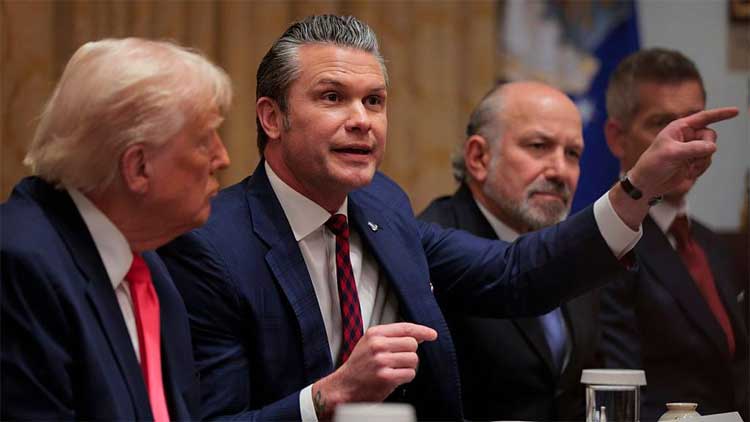
US Defense Secretary Pete Hegseth on Saturday defended a controversial September 2 decision to launch a second strike on a suspected drug-running vessel in the Caribbean, saying he “fully supports” the move.
Speaking at the Reagan National Defense Forum in Simi Valley, California, Hegseth said, “I would have made the same call myself,” referring to the follow-up strike that killed two survivors from the initial attack.
His comments come after members of Congress were shown a classified video of the incident on Thursday. According to sources familiar with the footage, the video depicts two shirtless, unarmed men clinging to debris after their boat was destroyed — raising fears among lawmakers and legal experts that US forces may have committed a war crime.
Reports earlier in the week alleged that the commander overseeing the mission ordered the second strike to ensure no survivors remained, believing this aligned with Hegseth’s directive. Officials within the Trump administration, however, have pushed back, saying Hegseth never ordered additional fire. Instead, they maintain that Admiral Frank Bradley — then head of Joint Special Operations Command — authorized the strike because the wreckage might have contained cocaine and needed to be “neutralized.”
Hegseth reiterated on Saturday that he witnessed the first strike but left for another meeting before the alleged second hit. He declined to say whether the administration would release the full video publicly, noting only that the matter is “under review.”
The September 2 attack was the first of 22 US military strikes on vessels in the southern Caribbean and eastern Pacific as part of the Trump administration’s campaign to stem drug trafficking. These operations have killed 87 people to date, including one in the eastern Pacific as recently as Thursday.
Critics say the imagery from the September 2 incident raises serious legal concerns. The Pentagon’s own Law of War Manual prohibits targeting shipwrecked combatants who are incapacitated or attempting no further hostilities, explicitly defining attacks on such survivors as a “clearly illegal” order that must be refused.
The Trump administration has defended its strategy by characterizing drug cartels as hostile armed groups, arguing that narcotics smuggled into the United States contribute to American deaths.
Comments are closed.