
‘Heaven on Earth’: Anand Mahindra Puzzled Over Why Tourists Aren’t Flocking to Spiti

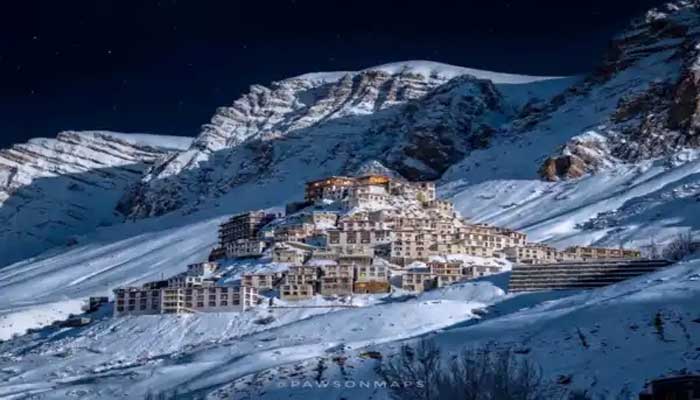
Industrialist Anand Mahindra is known for sharing thoughtful travel reflections on X (formerly Twitter), often drawing attention to places that leave a lasting impression on him. His latest post has turned the spotlight on the breathtaking Key Monastery in Himachal Pradesh’s Spiti Valley.
Captivated by its dramatic setting, Mahindra wrote:
“Living proof that Heaven can descend on Earth. It’s a mystery why the whole world isn’t flocking here. But perhaps its silence is its greatest gift.”
The remark resonated with many, as Spiti has long been known for its quiet charm and rugged beauty. Perched at an altitude of nearly 13,500 feet, Key Monastery is the oldest and largest monastery in the valley. Its tiered structure, rising sharply against barren mountains, is often compared to Ladakh’s Thiksey Monastery.
Spiritual and Cultural Significance
Key Monastery is closely linked to the revered reincarnations of Lochen Rinchen Zangpo, also known as the “Great Translator” (958–1055 AD). It is deeply rooted in the ancient Kadampa lineage and serves as the seat of the Lochen Tulkus lineage.
Through this tradition, the monastery is connected to the celebrated 11th-century Buddhist scholar Atisha Dipankara, reinforcing its importance in Tibetan Buddhism.
In 2000, His Holiness the 14th Dalai Lama consecrated a new and larger assembly hall. It features rare wall hangings depicting stories from the Buddha’s previous lives. Nearby prayer rooms house large prayer wheels and statues of Padmasambhava and Amitayus.
A Turbulent History
Founded in the early 15th century by Sherap Zangpo, a disciple of Je Tsongkhapa, Key Gompa belongs to the Gelugpa sect of Tibetan Buddhism.
Over the centuries, it has endured repeated attacks and natural disasters. It was damaged during Mongol invasions in the 17th century, conflicts between Ladakh and Kullu in 1820, and Dogra and Sikh attacks in 1841. A major fire in the 1840s and an earthquake in 1975 caused further destruction.
Subsequent restoration work by the Archaeological Survey of India and the State Public Works Department helped preserve the site.
Treasures Within the Monastery
Despite its turbulent past, Key Monastery remains rich in historical artefacts and rare manuscripts brought from Central Tibet by successive Lochen incarnations.
The upper floor houses a private apartment reserved for the Dalai Lama and a chamber containing the remains of the 18th Lochen Tulku. Lower levels include protector chapels, smaller assembly halls, ancient wall paintings, sacred scriptures, and a statue of Maitreya, the future Buddha.
A narrow staircase leads to the protector chapel, which is mainly used during winter.
Best Time to Visit
The ideal time to visit Key Monastery is between May and October, when roads are open and temperatures range between 10°C and 25°C. During winter, temperatures can fall below –20°C, and heavy snowfall often blocks access routes.
Travellers seeking cultural experiences can plan their visit in July, when the Ki Cham Festival is held. The festival features traditional masked dances by monks, symbolising the triumph of good over evil.
A Place of Quiet Wonder
With its dramatic landscape, spiritual heritage, and peaceful atmosphere, Key Monastery continues to inspire travellers from around the world. As Anand Mahindra’s post suggests, its greatest gift may lie in its silence—offering visitors a rare chance to experience serenity in one of India’s most remote and beautiful regions.
Comments are closed.