
GST Council Meeting Kicks Off: Rate Cuts and Slab Rationalisation on the Agenda

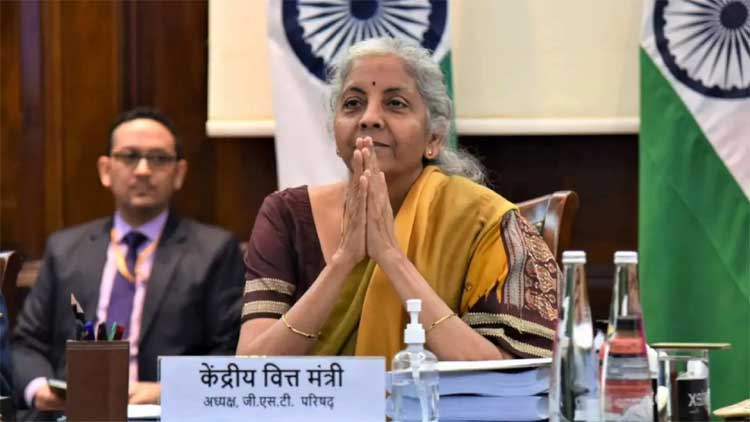
Union Finance Minister Nirmala Sitharaman will lead the 58th GST Council meeting today and tomorrow, translating Prime Minister Narendra Modi’s call for GST reforms into action. The agenda includes rate cuts for 175 items—ranging from cars to soaps and air-conditioners—and a major simplification of the GST structure from four slabs to two.
Key Highlights So Far
The GST Council, comprising union and state finance ministers, is focused on rate rationalisation, simpler compliance, and potential new compensation mechanisms. An officers’ meeting on Tuesday laid the groundwork for the council deliberations.
A two-slab GST system is proposed:
-
5% for essential goods
-
18% for non-essential goods
A separate 40% slab may apply to “sin goods,” such as tobacco and luxury cars priced above ₹50 lakh. The council’s fitment panel has already approved this two-tier structure.
Top Items Likely to See GST Cuts
-
Essentials: Toothpaste, shampoo, talcum powder, soaps—slashed from 18% to 5%.
-
Food items: Butter, cheese, and ready-to-eat foods like pickles and snacks may move to 5%.
-
Textiles: Nearly all items could fall under the 5% slab, benefiting companies such as Hindustan Unilever, Godrej Consumer, and Nestle India.
-
Consumer electronics: TVs, ACs, refrigerators, washing machines to drop from 28% to 18%.
-
Cement: Reduced from 28% to 18%.
Auto Sector Changes
-
Small petrol cars (≤1,200 cc) and small hybrid cars may see GST reduced from 28% to 18%, aiding Maruti Suzuki and Toyota India.
-
Electric cars priced ₹20-40 lakh could face a GST hike from 5% to 18%, with luxury EVs facing even higher rates—affecting Tata Motors, Mahindra & Mahindra, Tesla, and BYD.
-
Two-wheelers may drop to 18% from 28%, benefiting Hero MotoCorp, but high-capacity bikes (>350 cc) could be taxed at 40%, impacting Bajaj Auto and Royal Enfield.
What GST Rationalisation Could Look Like
-
Simplified structure: From four slabs (5%, 12%, 18%, 28%) to two (5% and 18%) plus a 40% luxury/sin goods slab.
-
Ease of Doing Business: Fewer categories reduce compliance costs and litigation, streamlining administration.
-
Revenue neutrality: Higher taxes on luxury items aim to offset lower slabs.
-
Compensation mechanisms: Projected ₹40,000–50,000 crore cess surplus may compensate states, with phaseout by 31 October.
-
Duty inversion: Alignment of input and output rates to benefit consumers.
Why GST Reforms Matter
During his Independence Day speech, PM Modi announced the most significant indirect tax overhaul since 2017. The reforms aim to cushion India’s economy against US tariffs on Indian goods, particularly crude oil.
According to SBI Research, GST reforms could boost GDP by 60 basis points over the next year, partially offsetting potential 1 percentage point losses from tariffs. The weighted average GST rate is expected to fall to 9.5%, easing retail inflation by 20–25 basis points and boosting consumption.
Revenue Implications
-
IDFC First Bank estimates a revenue loss of ₹1.65–1.70 lakh crore.
-
SBI Research projects a hit of ₹60,000 crore–₹1.1 lakh crore if the two-tier system with a 40% slab is adopted.
-
Mitigation: ₹45,000 crore from the GST Compensation Cess fund could neutralise losses, while higher consumption may recoup additional revenue.
Comments are closed.