
Global Heavyweights Push for Breakthrough as COP30 Negotiators Race Against Deadline in Brazil

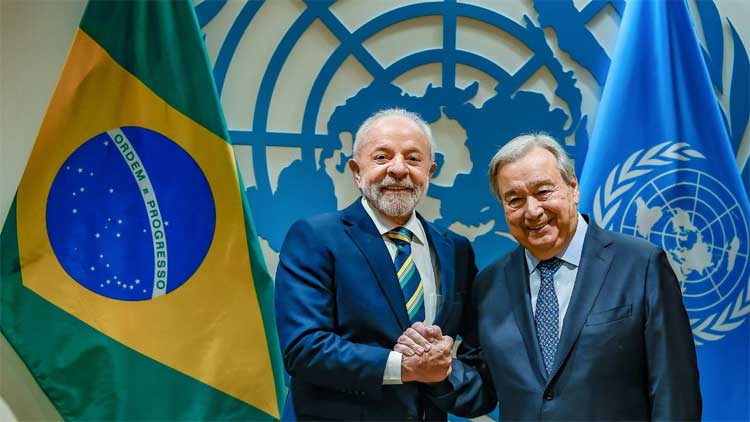
Two major international figures stepped in on Wednesday to jolt stalled negotiations at the United Nations climate summit in Belém, Brazil, where delegates are running up against a self-imposed deadline. UN Secretary-General António Guterres and Brazilian President Luiz Inácio Lula da Silva arrived at COP30 to personally nudge negotiators toward compromises, raising hopes among attendees that their intervention could unlock progress by day’s end.
Lula’s packed schedule included meetings with representatives from the European Union, emerging economies across Latin America, the Middle East and Asia, as well as vulnerable small island states and African nations.
“The COP is nearing the endgame, and the joint arrival of both Lula and Guterres gives a clear political signal that they mean business,” said Carolina Pasquali, Executive Director of Greenpeace Brazil.
Still, missed deadlines are a familiar feature of global climate talks.
Key Issues Back on the Table
Though COP30 is slated to run until at least Friday, summit president André Corrêa do Lago set a Wednesday deadline for negotiators to resolve four contentious and interconnected issues originally left off the formal agenda:
-
Whether nations should be required to strengthen their upcoming climate plans;
-
The framework for distributing $300 billion in pledged climate finance;
-
How to address climate-related trade barriers;
-
Improving global transparency and reporting on climate progress.
At the same time, more than a hundred countries—rich and poor—are pushing for a clear, detailed roadmap to phase out fossil fuels. Such a plan is seen as critical for strengthening new national climate commitments and keeping alive the target of limiting global warming to 1.5°C, as outlined in the 2015 Paris Agreement.
Last year, negotiators agreed to “transition away” from coal, oil, and gas after fraught debate, but the vague language has drawn criticism, especially as little follow-up action has materialized since. Protesters inside and outside the venue have continued pressing for a full fossil fuel phaseout.
On Wednesday, a group of scientists warned that the current draft proposals for a phaseout roadmap fall far short of what is needed—particularly if the world hopes to reach zero fossil fuel emissions by 2045.
“A road map is not a workshop or a ministerial meeting. A road map is a real work plan that needs to show us the way from where we are to where we need to be, and how to get there,” wrote seven prominent scientists advising the COP30 presidency.
Lula’s Climate Push and Fossil Fuel Debate
President Lula has emphasized the urgency of defining how the world will move off fossil fuels, calling their phaseout essential to curbing planet-warming emissions.
He is also lobbying for broader participation in the Tropical Forests Forever Facility—a new multibillion-dollar fund backed by interest-bearing debt rather than traditional donations. The initiative aims to financially reward countries for preserving their forests rather than clearing them.
But forging consensus remains difficult.
“Various apparent impasses still remain, and chief among these from an African point of view is the unwillingness of the EU and other rich countries to engage on their obligation to provide climate finance,” said Iskander Erzini Vernoit, director of the IMAL Initiative for Climate and Development.
Implementation Takes Center Stage
Ahead of the two-week summit, Brazilian leaders stressed the need to shift focus from making new pledges to implementing existing commitments.
A new report from Climate Analytics argues that if nations simply met targets already agreed upon—tripling renewable energy, doubling energy efficiency, and slashing methane emissions by 2030—the pace of global warming could be cut by one-third by 2040.
Neil Grant, the report’s lead author, said such action could still salvage the Paris Agreement’s ambitions. “Although the hour is dark, we still have agency,” he said.
Dozens of New Action Plans Unveiled
High-level climate liaisons convened Wednesday to spotlight more than 110 new or accelerated action plans tied to previous COP goals. While such initiatives often generate little fanfare, they form the backbone of real-world climate progress, said COP30 Climate Champion Dan Ioschpe.
“We need to make sure that we reach the targets of the Paris Agreement. And for that we need to implement technologies, solutions, processes,” he told the Associated Press, highlighting aviation, maritime transport, and agriculture as key sectors.
Among the most ambitious efforts launched at COP30 is a push to secure a $1 trillion commitment from governments and businesses to modernize global electricity grids, expand renewable energy storage, and quadruple biofuel production.
Comments are closed.