
From Tariff Standoff to Breakthrough: How India and the US Finally Sealed a Trade Deal

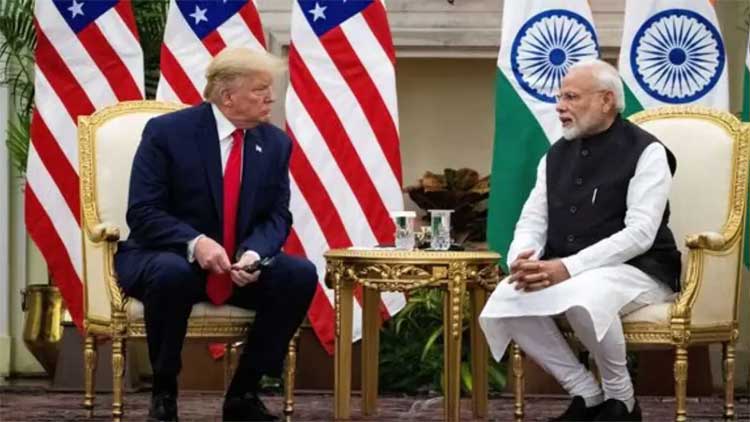
For much of the past year, India–US trade relations remained stuck in a prolonged impasse, shaped by high tariffs, sharp political rhetoric, disputes over energy imports, and stalled negotiations. Despite repeated diplomatic engagements and leadership-level talks, a breakthrough proved elusive—until Monday.
After months of uncertainty, a phone call between Prime Minister Narendra Modi and US President Donald Trump paved the way for what both sides are now calling a landmark trade agreement.
Under the deal, US tariffs on Indian goods will be reduced from 50 per cent to 18 per cent, marking a major shift from the strained relationship that dominated much of 2025, when the two strategic partners clashed over trade rules, market access, and energy policy.
From Optimism to Tariff Pressure
Trade talks had begun on a positive note in February last year, when India and the US launched a renewed negotiation process during Modi’s visit to Washington. The aim was to finalise an initial trade framework by autumn.
However, disagreements soon emerged over digital trade, tariff structures, market access, and energy sourcing. By spring, negotiations had slowed, and tensions began to rise.
In April, the US imposed reciprocal tariffs of 25 per cent on Indian imports as part of a wider global trade action. Although some duties were later eased, a baseline levy remained in place, continuing to strain ties.
Tariffs Escalate Over Russian Oil
Relations deteriorated sharply in mid-2025, when Washington raised tariffs on Indian goods to 50 per cent. The hike included a 25 per cent punitive levy linked to India’s continued purchase of Russian crude following Western sanctions over the Ukraine war.
The move made India one of the most heavily taxed US trading partners and triggered strong objections from New Delhi, which argued that its energy decisions were guided by market conditions and national security needs.
Although Indian officials later indicated that Russian oil imports had begun to decline, energy trade had already become the central fault line in the dispute.
Talks Continue Despite Friction
Despite rising tensions, negotiations never fully collapsed. Over the year, both sides held at least six formal rounds of talks, along with several informal consultations.
A US delegation led by a deputy trade representative visited India as recently as December 2025 to sustain dialogue. Leadership-level engagement also remained active, with Modi and Trump holding at least eight phone conversations during the year, according to the Ministry of External Affairs.
Yet, progress remained limited, and trade talks increasingly became entangled with political messaging.
Public Remarks Add to Strain
Tensions deepened in January after US Commerce Secretary Howard Lutnick claimed on a podcast that the deal had faltered because Modi “didn’t call” Trump at a crucial moment.
India rejected the assertion, saying the two leaders had remained in regular contact and negotiations had continued despite challenges.
The comments sparked political debate in India, with opposition leaders criticising the US stance and reaffirming the strategic importance of bilateral ties.
Wider Irritants Cloud Relations
Trade disputes coincided with other sources of friction, including tighter US immigration rules and criticism of India’s defence and energy ties with Russia.
Trump also repeatedly claimed that he had helped mediate a ceasefire following last year’s India–Pakistan tensions—an assertion New Delhi did not endorse.
Even so, mixed signals persisted. At the World Economic Forum in Davos, Trump praised Modi as a “fantastic leader” and described ties as “special,” despite unresolved trade issues.
Breakthrough After Leader-Level Call
The deadlock finally ended after a fresh phone conversation between Modi and Trump on Monday night. The call was first highlighted by the US ambassador to India and later confirmed by Trump in a social media post announcing a trade framework.
Trump said US tariffs on Indian goods would be cut to 18 per cent with immediate effect. He also claimed that India would reduce trade barriers, significantly expand purchases of American goods, and shift away from Russian oil.
India’s official statement confirmed the tariff reduction and welcomed the agreement but did not endorse all of Trump’s broader claims, including zero-tariff commitments and a $500 billion purchase pledge.
Prime Minister Modi described the agreement as a “wonderful announcement” and highlighted deeper economic cooperation, without referring to energy commitments or Russian oil.
Comments are closed.