
From MVA to Seat Sharing: Key Hurdles Facing a Possible Raj-Uddhav Alliance

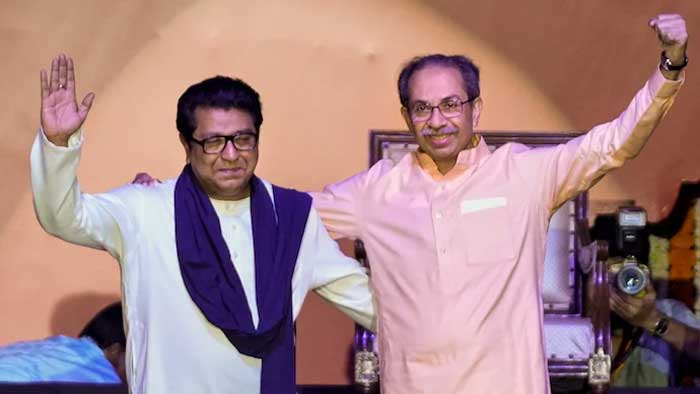
At a joint rally on Saturday, Uddhav Thackeray sparked speculation of a political alliance with cousin Raj Thackeray, saying, “We have come together to stay together,” drawing loud cheers from supporters.
However, the prospect of the Shiv Sena (UBT) and Maharashtra Navnirman Sena (MNS) contesting elections together is far from certain.
Raj Thackeray, notably, stopped short of confirming any alliance in his own speech, and several unresolved issues loom large over the possibility of the cousins joining forces.
🔍 Key Hurdles to a Potential Thackeray Alliance:
1. Fate of the MVA Alliance
A major question is how a Shiv Sena (UBT)-MNS tie-up would impact the Maha Vikas Aghadi (MVA). Would Raj be part of the opposition coalition that includes the NCP (Sharad Pawar faction) and the Congress?
While NCP leaders like Supriya Sule have shared the stage with Uddhav, the Congress remains uneasy with Raj’s past rhetoric and aggressive politics. It remains unclear if a broader understanding that includes MNS can be worked out.
2. Organizational Weaknesses
Both the Shiv Sena (UBT) and MNS have suffered heavy defections over the past five years. After the 2022 Sena split, Chief Minister Eknath Shinde’s faction has weakened Uddhav’s grip on key regions, while the MNS has struggled to retain its base.
Rebuilding grassroots networks and mobilizing cadre would be a daunting challenge—and one that both parties may not be fully prepared to tackle.
3. Seat-Sharing Dilemma
Upcoming municipal and zilla parishad elections—likely to be held after the monsoon—could serve as a first test for any new alliance.
However, both parties draw support from similar Marathi-speaking urban constituencies, leading to inevitable clashes over ticket distribution. Negotiating seat-sharing without alienating loyal party workers could prove contentious.
4. Competing Narratives: Marathi Asmita vs Hindutva
While Uddhav and Raj may attempt to rally voters around Marathi identity (asmita), the BJP is doubling down on Hindutva, hoping to consolidate both non-Marathi and conservative Marathi voters.
This ideological tug-of-war could undercut the cousins’ appeal, especially in Mumbai and its suburbs, where voter blocs are diverse and polarized.
5. Leadership Tug-of-War
The original split between Raj and Uddhav in 2005 stemmed from a struggle over leadership of the Shiv Sena. Two decades later, that fundamental tension remains unresolved.
A joint alliance would inevitably raise the question: Who leads?
Both Uddhav and Raj are seasoned leaders with distinct styles and loyal followings—and now, both have politically ambitious sons rising in the ranks. Managing egos and power-sharing could easily derail any potential unity.
⚖️ The Road Ahead
While the joint appearance may signal an intent to unite, forging a sustained alliance will require more than symbolism. With elections looming and political stakes high, the Thackeray cousins must navigate ideological differences, seat-sharing challenges, and historical rivalries—all under the watchful eyes of both supporters and opponents.
Comments are closed.