
From Akash to BrahMos to Arjun: Inside India’s Defence Line-Up at Republic Day Parade

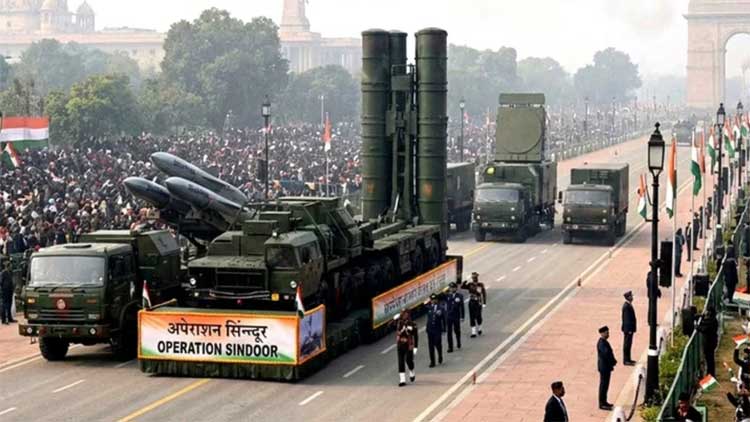
India is celebrating its 77th Republic Day with a grand parade at Kartavya Path, highlighting the country’s military strength, cultural diversity, and technological progress. Alongside vibrant tableaux, this year’s parade places special emphasis on India’s expanding defence capabilities, featuring newly raised units and advanced weapon systems.
For the first time, the parade is being presented in a “phased battle array formation” — a combat-sequenced display designed to reflect real battlefield deployment. Infantry, mechanised columns, artillery, missile units, and aerial assets will appear in a coordinated sequence, offering spectators a rare insight into how the armed forces operate during conflict.
From BrahMos to Arjun: India’s Defence Arsenal on Display
A wide range of military platforms will roll down Kartavya Path, showcasing India’s defence inventory. Key systems include:
-
BrahMos and Akash missile systems
-
Medium Range Surface-to-Air Missile (MRSAM)
-
Advanced Towed Artillery Gun System (ATAGS)
-
Dhanush artillery gun
-
Divyastra Battery and drone displays
Making its debut at the parade is the Universal Rocket Launcher System (URLS) ‘Suryastra’, capable of conducting surface-to-surface strikes up to 300 km, officials said.
Main Battle Tank Arjun and T-90 Bhisma tanks will feature in the mechanised columns, supported by Apache AH-64E and Prachand light combat helicopters. Other platforms include BMP-II infantry combat vehicles and the Nag (Tracked) Mk-2 missile system.
The Defence Research and Development Organisation (DRDO) will also showcase its Long Range Anti-Ship Hypersonic Missile (LR-AShM), a hypersonic glide weapon designed to engage both stationary and moving targets.
Air Power Takes Centre Stage in ‘Sindoor’ Formation
Air power will be a major highlight of the parade, with seven fighter aircraft flying in the newly introduced ‘Sindoor’ formation, reflecting the Indian Air Force’s role in Operation Sindoor.
The formation will include:
-
Two Rafale jets
-
Two MiG-29 fighters
-
Two Sukhoi-30 aircraft
-
One Jaguar
For the first time, the aerial display will be conducted in two separate blocks. The fly-past will feature 29 aircraft — 16 fighters, four transport planes, and nine helicopters.
Aircraft on display will include Rafale, Su-30 MKI, MiG-29, and Jaguar fighters, along with C-130, C-295, and Navy P-8i surveillance aircraft. Helicopter formations will feature Dhruv Advanced Light Helicopters and Rudra attack variants flying in ‘Prahar’ formation.
A glass-cased integrated operational centre will also be displayed, offering a visual narrative of Operation Sindoor.
Army Restructuring and New Units
The parade will reflect ongoing reforms within the Army. Newly raised Bhairav light commando units and the Shaktiban Regiment will make their first appearance.
The Shaktiban Regiment, part of the artillery arm, is equipped with drone, counter-drone, and loiter munition systems, highlighting the growing role of unmanned warfare.
In another first, members of the mounted 61 Cavalry will march in battle gear. Traditionally known for ceremonial uniforms and distinctive headgear, the unit has long led the armed forces contingent, PTI reported.
The parade will be commanded by Lieutenant General Bhavnish Kumar, General Officer Commanding, Headquarters Delhi Area.
Chief Guests from the European Union
European Commission President Ursula von der Leyen and European Council President Antonio Costa will attend as chief guests, adding a strong diplomatic dimension to the celebrations.
This marks only the second time that leaders of a regional grouping have been invited as chief guests, after ASEAN leaders in 2018.
An EU contingent, featuring four flag bearers on three gypsy vehicles, will also participate in the ceremonial procession.
Theme: 150 Years of ‘Vande Mataram’
The central theme of this year’s celebrations is “150 Years of Vande Mataram”. The Ministry of Culture’s tableau will feature the complete version of the national song, amid renewed public and parliamentary discussions on its history and interpretation.
Republic Day, observed annually on January 26, commemorates the adoption of the Constitution, which came into force in 1950.
Comments are closed.