
Friday Prayers Turn Deadly as Blast Rips Through Islamabad Mosque

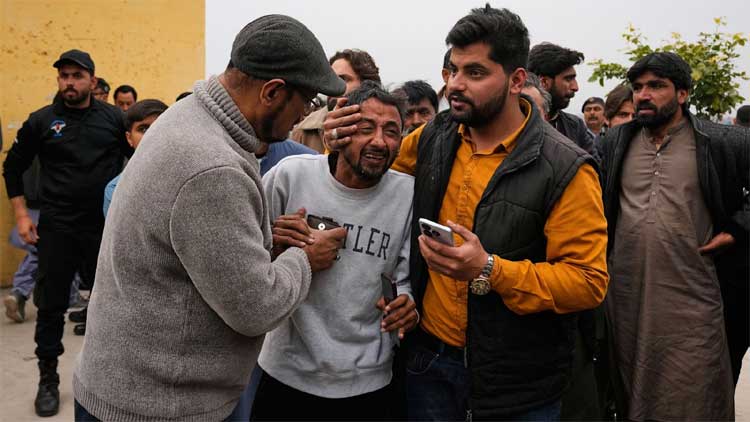
A worshipper at a Shiite mosque in Islamabad, where dozens of people were killed in a suicide bombing on Friday, has described an “extremely powerful” explosion that tore through the building moments after prayers began.
Muhammad Kazim, 52, told AFP that he arrived at the Imam Bargah Qasr-e-Khadijatul Kubra mosque shortly after 1:00 p.m. and was standing seven to eight rows behind the Imam when the attack occurred.
“During the first bow of the Namaz, we heard gunfire,” Kazim said outside the Pakistan Institute of Medical Sciences (PIMS) hospital, where many of the injured were being treated. “And while we were still bowing, an explosion took place.”
Kazim, a resident of Islamabad originally from Gilgit-Baltistan, escaped unharmed but accompanied a wounded friend to the hospital.
“It was not immediately clear that it was a suicide attack, but the blast was extremely powerful and caused many casualties,” he said. “Debris fell from the roof, windows were shattered, and when I got outside, bodies were scattered everywhere.”
The Daesh group has claimed responsibility for the attack, according to the SITE Intelligence Group, which monitors extremist communications.
Another worshipper, Imran Mahmood, said the attacker was involved in a gunfight with volunteer security personnel before detonating the explosives.
“The suicide bomber was trying to move forward when one of our volunteers shot him in the thigh from behind,” Mahmood, in his fifties, told AFP. “He fell but stood up again. Another man with him opened fire on our volunteers. Then he jumped onto the gate and blew himself up.”
As of Saturday morning, at least 31 people had been killed and 169 wounded in the attack. It was the deadliest incident in the Pakistani capital since September 2008, when a suicide truck bombing at the Marriott Hotel killed 60 people.
Lax Security Alleged
Describing the chaotic aftermath, Kazim said worshippers rushed to help the injured before emergency services arrived.
“People carried two or three bodies in their cars because ambulances came only after 20 to 25 minutes,” he said. “After that, no one was allowed near the mosque.”
Kazim, who had been attending Friday prayers at the mosque for several weeks, said security arrangements were inadequate.
“I have never seen proper security here,” he said. “Volunteers try to manage on their own, but they do not have the equipment needed. Shiite mosques are always under threat, and the government must take this seriously and provide proper protection.”
Comments are closed.