
Fear of losing Gen Z, electoral calculations forced BJP’s hand on Dharmendra Pradhan’s resignation

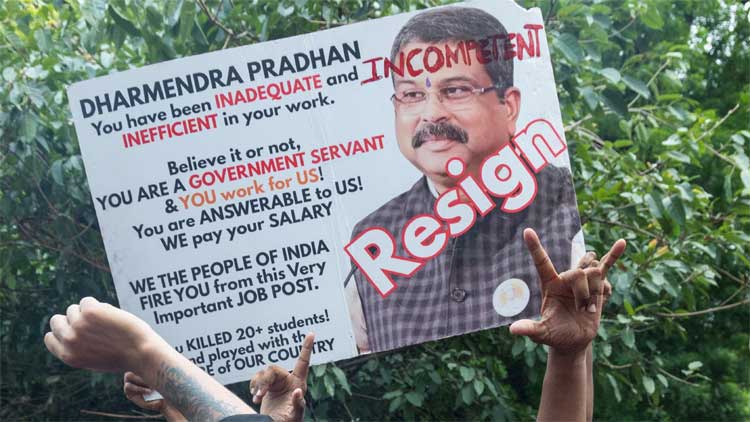
Union Education Minister Dharmendra Pradhan’s resignation came after days of intense deliberations within the government, with concerns mounting over the political, social and security fallout of the nationwide student protests over alleged examination irregularities, according to people familiar with the matter.
Officials said the government feared the agitation could escalate further and alienate young voters—particularly Gen Z—at a time when the Bharatiya Janata Party (BJP) is preparing for crucial state elections.
The protests, led by the Cockroach Janta Party (CJP), began over alleged irregularities in the NEET and other public examinations. The movement, which started as an online satire campaign before evolving into a nationwide sit-in at Delhi’s Jantar Mantar, drew support from students across the country. One of its central demands was Pradhan’s resignation.
According to sources, negotiations between the government and CJP reached a deadlock over the minister’s future, prompting Pradhan to offer his resignation while taking “moral responsibility” for the controversy.
Senior BJP leaders said the government initially believed corrective measures—including conducting a re-examination and initiating legal action against those accused in the paper leak cases—would be sufficient. However, they argued the protests gathered momentum as opposition parties and other groups amplified the issue.
The political pressure intensified in Parliament, where opposition parties made Pradhan’s resignation a key demand and threatened to stall proceedings, including the government’s proposed legislation to strengthen anti-paper leak laws.
Security agencies also played a significant role in shaping the government’s decision. Officials reportedly warned of the possibility of violence and widespread unrest over the weekend if the protests continued, prompting the Centre to opt for what one source described as a “tactical retreat” to prevent escalation.
Prime Minister Narendra Modi had earlier assured students of fast-track justice and announced plans to tighten laws governing public examinations with harsher penalties for malpractice. Despite these assurances, the protests continued unabated.
The Rashtriya Swayamsevak Sangh (RSS) is also understood to have advised the government not to dismiss the movement lightly, urging engagement with protesters and broader reforms in the education sector. RSS chief Mohan Bhagwat recently highlighted the need to respond to young people’s questions with logic and dialogue rather than authority.
Party insiders said another major factor was the fear of a broader youth movement. Drawing parallels with historic student-led agitations such as the JP Movement and the India Against Corruption movement, BJP leaders acknowledged that no political party could afford to lose the support of young voters, particularly with elections approaching in politically significant states such as Uttar Pradesh and Punjab.
Comments are closed.