
EU Warns Ocean Carbon Removal Is Still Unproven, Calls for Caution Amid Growing Global Interest

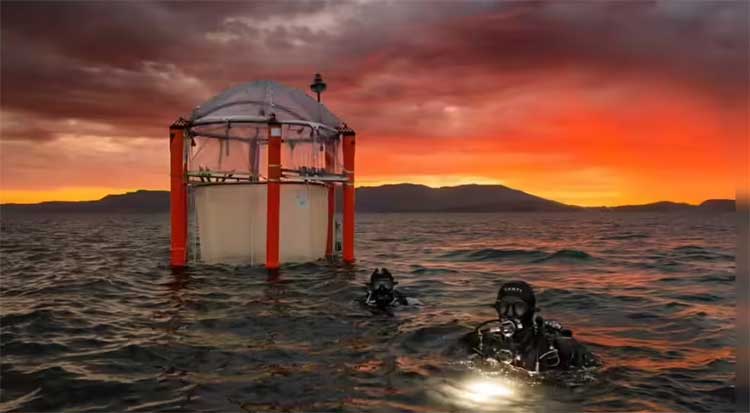
Scientists, governments and climate groups are increasingly exploring ocean-based carbon removal as a potential tool to slow global warming. Because the world’s oceans naturally absorb large amounts of atmospheric CO₂, some experts argue that enhancing this process could help bring down global carbon levels.
But a new European Union report has urged strong caution, warning that these marine carbon removal technologies remain largely untested. The findings conclude that there is still not enough evidence to show whether such approaches are effective, measurable or environmentally safe—and that rushing to deploy them could harm fragile marine ecosystems.
How ocean carbon removal works
Countries racing to meet net-zero targets have shown growing interest in technologies that capture CO₂ from seawater using biological, chemical or mechanical methods. These include boosting plankton growth, expanding seaweed cultivation, restoring coastal ecosystems such as mangroves, or using engineered systems to extract CO₂ directly from surface waters.
Once captured, the carbon can be transported to the deep ocean, stored in sediments, trapped in rock formations or converted into long-lasting materials. While the theoretical potential is high, scientists say real-world results remain far from certain.
EU report flags major safety, reliability gaps
The report—commissioned by the European Marine Board and released at COP30 in Brazil—reviews the current body of scientific evidence and finds that no marine carbon removal method has yet demonstrated long-term effectiveness or proven ecological safety.
Led by climate researcher Helene Muri, the expert panel warns that scaling up these techniques prematurely could “cause more harm than good,” given the lack of data and the difficulty of predicting ecosystem impacts.
Rising urgency as global temperatures climb
Interest in carbon removal is growing alongside alarming climate trends. UN Secretary-General António Guterres said at COP30 that exceeding the 1.5°C global warming threshold within the next decade is now “highly likely,” urging governments to step up emissions cuts.
The EU report emphasises that reducing emissions remains the fastest and most reliable strategy, and that carbon removal—including ocean-based methods—must remain a supplementary tool rather than a substitute.
Why carbon removal is still needed
Some sectors, such as aviation, shipping and heavy industry, still cannot eliminate emissions entirely. To meet net-zero pledges by 2050, the Intergovernmental Panel on Climate Change (IPCC) estimates that 5–10 gigatonnes of CO₂ may need to be removed annually by 2100.
Land-based solutions like reforestation and industrial direct-air-capture plants already exist, but marine technologies are still in early stages of development.
Measurement and verification remain the biggest hurdles
Scientists say the largest challenge is accurately measuring how much carbon oceans can store and for how long. CO₂ absorbed by plankton or seaweed may eventually return to the atmosphere, and tracking deep-ocean carbon pathways is extremely difficult.
This uncertainty poses risks for the rapidly expanding carbon credit market. Some companies plan to sell ocean-based carbon removal credits, but the EU warns that without rigorous monitoring and verification, such credits could be misleading and could undermine global climate action.
The report calls for strict scientific standards, transparent guidelines and robust long-term data before ocean carbon removal is deployed at scale.
Comments are closed.