
EU Parliament Draft Resolution Says Climate Change Is Political, Urges ECB to Focus on Price Stability

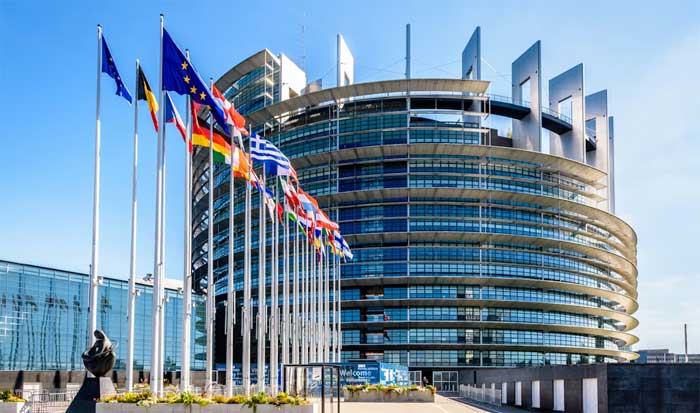
A draft resolution from the European Parliament has questioned the European Central Bank’s (ECB) growing focus on climate change, arguing that the issue is political and reminding the central bank that its primary mandate is price stability, not environmental policy.
The report, which is yet to be voted on, reflects a shifting political climate within the European Union, where priorities such as defence spending, competitiveness and economic security are increasingly taking precedence over climate action.
Although the European Parliament’s annual resolution on the ECB is not legally binding, it plays an important role in shaping dialogue between the two institutions and signals the policy direction Brussels expects the central bank to follow in the coming year.
“The intention is quite clear from the rapporteur that they are trying to essentially stop the climate agenda of the European Central Bank,” said Clarisse Murphy, central banks campaigner at Reclaim Finance.
The resolution was drafted by Belgian MEP Johan Van Overtveldt and challenges both the ECB’s primary and secondary mandates. Like most central banks, the ECB’s main objective is to maintain price stability. However, it also has a secondary mandate to support broader EU objectives — including climate action — provided this does not conflict with its primary goal.
Murphy said the language of the draft closely mirrors rhetoric used by US President Donald Trump and the US Federal Reserve on limiting central banks’ roles in climate policy. She added that it highlights a widening gap between some lawmakers and the scientific and economic realities of climate change.
“This isn’t the first year the draft report has pushed back against climate action,” Murphy noted, adding that it is worrying the ECB often appears to be “the most progressive body in the room” on the issue.
ECB’s Climate Measures Under Scrutiny
Over the past year, the ECB has taken several steps to address climate-related financial risks. These include fining a bank for failing to properly assess its climate exposure and incorporating climate considerations into its collateral framework.
ECB President Christine Lagarde has repeatedly argued that climate change directly affects price stability — the ECB’s core mandate — a view supported by many economists. Research has shown that extreme weather events can drive food price inflation, while the Network for Greening the Financial System, a group of 148 central banks, warned in November about the economic costs of climate inaction.
“Saying climate change does not affect prices simply doesn’t align with the consensus among central bankers or with what we are experiencing in terms of inflation,” Murphy said.
Laura Casonato, head of policy at Positive Money Europe, echoed that view, calling climate change a “core economic and financial risk” that clearly falls under the ECB’s main mandate of price stability, as well as its secondary obligation to support EU goals such as sustainable development.
She also said the draft report misinterprets the concept of central bank independence. “Independence means the ECB can take necessary actions while remaining transparent and accountable — not that it operates without democratic oversight,” Casonato said, adding that stronger communication between the ECB and the European Parliament would be beneficial.
Inflation Targets Debate
The draft resolution also urges the ECB to review its inflation targets. While Casonato agreed that regular reviews are necessary, she argued the report overlooks the real drivers of inflation, including geopolitical instability and energy dependence.
The draft is currently under discussion in the European Parliament’s economic and monetary affairs committee. A vote is expected on January 15, followed by a final plenary vote in February.
Comments are closed.