
Egypt’s Jasmine Farmers Struggle Against Climate Change and Poverty

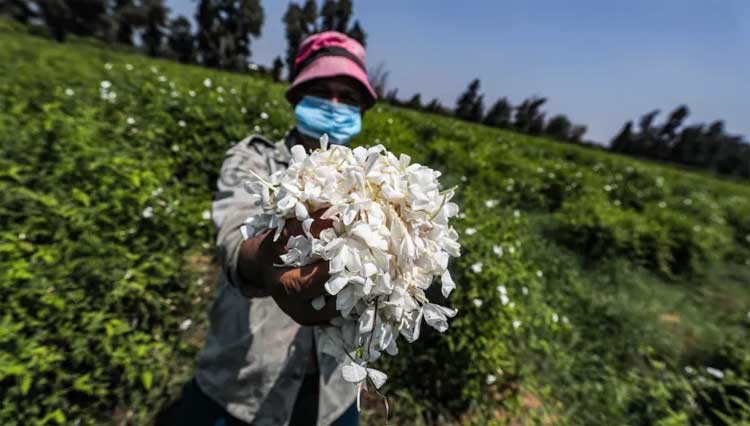
In the Nile Delta village of Shubra Balula, nightfall once brought the sweet scent of jasmine. Today, the fragrance is fading.
Wael Al-Sayed, 45, has spent nearly a decade harvesting blossoms for the world’s perfume houses. But as summers grow hotter, his nightly yield has dropped from six kilograms to just two or three. “It’s the heat,” he says.
Egypt produces nearly half the world’s jasmine concrete — the waxy extract that forms the base of luxury fragrances — yet the families who pick it are being squeezed by climate change and collapsing wages.
Rising temperatures and prolonged dry spells are reducing flower yields, while pests thrive in the heat. According to processors, Egypt’s annual production of jasmine concrete has fallen from 11 tons in the 1970s to just 6.5 tons today. The blooms that survive are weaker in scent, lowering the value of the oil they produce.
The losses ripple through households. Harvesting takes place between midnight and dawn, forcing families — including children — into the fields. Sayed now brings along his 9- and 10-year-olds, who work all night before heading to school. Egypt counts more than 4 million child laborers across sectors, with jasmine farming part of the cycle.
Despite perfume brands charging up to $6,000 per kilogram of jasmine absolute, pickers earn just about $2 for every kilogram of flowers. A ton of blossoms yields only a few kilograms of concrete — and less than half that in essential oil. Egypt’s currency crash and runaway inflation mean wages buy less each season. A rare strike last year won pickers only a token raise.
Meanwhile, the land itself faces long-term peril. The Nile Delta is increasingly exposed to rising Mediterranean waters that threaten soil quality. Rural sociologist Saker El Nour warns that entire jasmine-growing villages may soon “lose their viability altogether.”
For Sayed and thousands of others, the tradition that once sustained families is withering under the dual pressures of climate change and economic hardship. “What’s 100 pounds worth today?” he asks. “Nothing.”
Comments are closed.