
DRDO Integrates Chinese PL-15 Missile Features into Astra Mk-2 Following Operation Sindoor Analysis

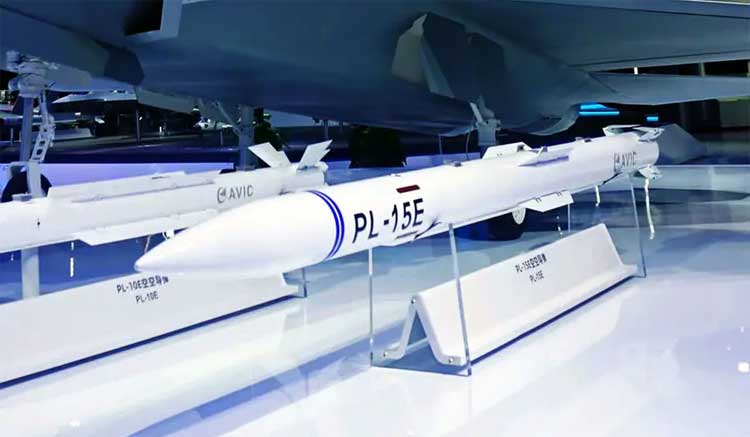
The Defence Research and Development Organisation (DRDO) is set to incorporate advanced technologies from China’s PL-15 air-to-air missile into India’s indigenous Astra Mark-2 programme, officials familiar with the matter said. This decision follows a detailed technical study of an unexploded PL-15 missile recovered in May.
The PL-15E missile, an export variant with a 145-kilometre range, was found intact in a field near Hoshiarpur, Punjab, on May 9. Its failure to explode provided Indian defence scientists with a rare opportunity to study its design, as the missile lacked a self-destruct mechanism—a feature present in all Indian air-to-air missiles.
The recovery occurred during Operation Sindoor, India’s coordinated response to the April 22 Pahalgam terror attack, which killed 26 civilians. The missile, reportedly fired from a Pakistan Air Force JF-17 or J-10C fighter, missed its target and landed about 100 kilometres inside Indian territory.
While DRDO has not publicly disclosed its findings, sources said the analysis revealed several superior features in the Chinese missile, including:
-
Miniature active electronically scanned array (AESA) radar
-
Advanced propellant enabling speeds above Mach 5
-
Sophisticated anti-jamming capabilities
These technologies, particularly the radar system, are being adapted for India’s Astra missile development programme.
Pakistan’s Response and Indian Preparedness
Officials indicated that Pakistan is upgrading its arsenal following Operation Sindoor. The Pakistan Air Force is reportedly pursuing:
-
Longer-range PL-17 missiles for wide-bodied aircraft from China
-
2,000 YIHA kamikaze drones from Turkey
-
High-tech weapons procurement from the US
Meanwhile, India’s own weapons performed effectively during the operation. BrahMos, Rampage, and SCALP missiles demonstrated strong results. Indian planners are also acquiring additional Meteor missiles for Rafale fighters to maintain operational flexibility, while a next-generation BrahMos with an 800-kilometre range is under development, covering nearly the entire breadth of Pakistan.
The evolving threat, including Pakistan’s deployment of three to five Chinese HQ-9 air defence systems, has prompted a strategic shift. Future engagements are expected to see Indian fighters operating beyond enemy air defence envelopes, launching long-range supersonic missiles capable of evading ground and airborne radar systems.
Ceasefire Violations and Future Stance
Indian national security officials have noted repeated ceasefire violations by Pakistan. On May 10, Pakistani forces fired kamikaze drones and rockets in Jammu and Rajasthan despite a declared ceasefire. Similar breaches occurred recently in Spin Boldak, Afghanistan, against civilians despite a 48-hour no-fire pact with the Taliban.
While India did not retaliate to the May 10 violations, officials warned that New Delhi would adopt a firmer stance in any future incidents.
This integration of PL-15 technology into Astra Mk-2 underscores India’s focus on modernising missile capabilities in response to evolving regional threats.
Comments are closed.