
‘Don’t Bully Us’: Schumer Fires Back at Trump After ‘Go to Hell’ Outburst

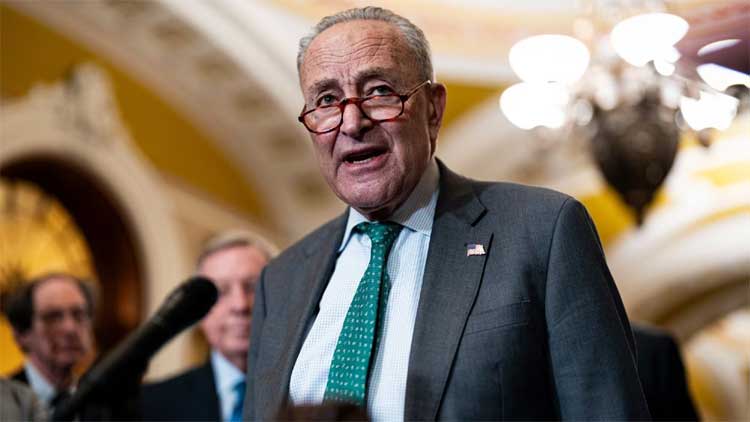
Senate Minority Leader Chuck Schumer delivered a scathing rebuke of President Donald Trump’s approach to negotiations, accusing him of trying to “steamroll” the Senate instead of building bipartisan support for his nominees. The comments came as the Senate adjourned for its August recess without reaching a deal to confirm dozens of Trump administration appointments.
Schumer said Trump abandoned negotiations “in a fit of rage” after Democrats refused to advance his nominees without concessions.
“Trump tried to bully us, go around us, call us names — but he got nothing,” Schumer said, referencing a Truth Social post where Trump told him to “GO TO HELL!” Schumer fired back: “He walked away with his tail between his legs.”
The collapse of talks came after days of back-and-forth between Senate Republicans, Democrats, and the White House, which had hoped to push through a package of nominees before the recess. Trump had been urging Republicans to cancel the break and stay in session, but his online tirade on Saturday night signaled an abrupt end to negotiations.
“Is this the art of the deal? Cajole, stomp your feet, then give up?” Schumer asked. “Trump attempted to jam the Senate with a historically unqualified nominee. Democrats stood firm, and when he couldn’t get his way, he told Republicans to go home.”
Republicans Eye Senate Rule Changes
Following the breakdown, Senate Majority Leader John Thune floated the possibility of altering Senate rules to speed up confirmations, calling the current process “broken.”
“I expect there will be some robust conversations about that,” Thune said, noting that Democrats had refused to grant unanimous consent on Trump’s nominees, forcing time-consuming roll call votes on each individual.
Schumer called any rule change a “huge mistake,” warning it would further erode bipartisan cooperation.
“When they change the rules, they say only they will decide what’s good for the American people. Every time they do that, the American people lose,” he said.
Stalemate Reflects Deepening Partisan Divide
The impasse reflects years of escalating partisan warfare over presidential appointments. Democrats eliminated the 60-vote threshold for lower-court judicial nominees in 2013, and Republicans followed suit in 2017 for Supreme Court picks to confirm Justice Neil Gorsuch.
This year, Trump has faced unusually strong Democratic resistance, with few nominees advancing quickly and the Senate often tied up for days on a single confirmation. Republicans had hoped to broker a deal with Democrats in exchange for reversing some of Trump’s proposed cuts to foreign aid spending, but negotiations ultimately collapsed.
Thune said there were “several different times” where a deal seemed within reach, but added: “In the end, we didn’t close it out.”
Democrats Hold Firm
Schumer defended his party’s resistance, citing the quality of Trump’s picks.
“We’ve never seen nominees as flawed, as compromised, or as unqualified as we have right now,” he said.
Democrats also had little incentive to compromise without getting policy concessions — and with a long and contentious session behind them, many were eager to adjourn.
While both sides acknowledge that nominee battles have become increasingly bitter over the years, Schumer said future confirmations must be based on negotiation, not intimidation.
“We should be working together on legislation to deliver results for the American people — not threatening rule changes just to score short-term wins,” he said.
Comments are closed.