
Democrats Force Shutdown Over Health Care, Leaving Path Forward Unclear

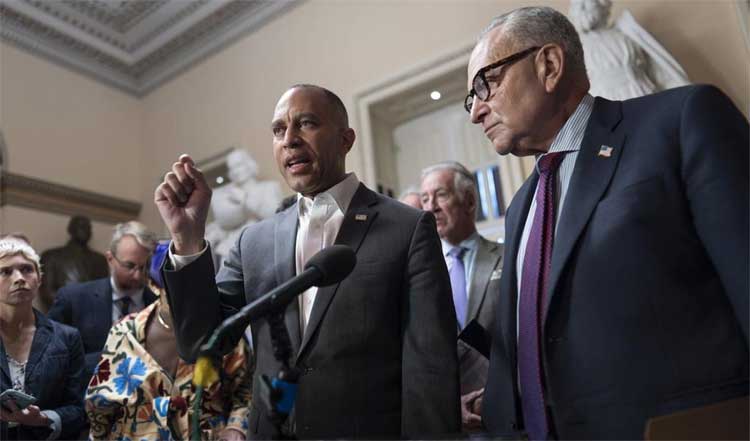
Senate Democrats followed through on their pledge to block any Republican stopgap spending bill that did not extend health care subsidies, triggering a government shutdown. Now, they face the challenge of finding a way out.
Just hours after the shutdown began, Senate Majority Leader Chuck Schumer said Republicans could end it quickly if they came to the table. GOP leaders, however — Majority Leader John Thune, House Speaker Mike Johnson and President Donald Trump — have vowed not to negotiate under pressure. The bill Democrats rejected was a 45-day funding extension, which Republicans said should have been uncontroversial.
Some Democrats already appear uneasy. Three senators — John Fetterman (D-Pa.), Catherine Cortez Masto (D-Nev.), and Independent Angus King (Maine) — broke ranks and voted with Republicans to keep the government open. With Republicans holding the majority, eight Democratic votes are needed to reach the 60-vote threshold.
The shutdown has immediate consequences. The White House announced a freeze on tunnel and subway projects in New York, targeting Schumer’s home state. Republicans framed the closure as a Democratic misstep. “This Democrat shutdown is actually delaying progress on the issues that Democrats claim to be interested in,” Thune said.
Democrats remain divided. Some, like Sen. Chris Murphy (D-Conn.), urged colleagues to dig in and use the shutdown as leverage against Trump. Others, such as Sens. Jeanne Shaheen (D-N.H.) and Gary Peters (D-Mich.), have signaled a willingness to find compromise after voting no.
At the heart of the standoff is the future of Affordable Care Act subsidies first expanded during the pandemic. Democrats want an immediate extension, while Republicans say they are open to discussions but only after reopening the government. Johnson has dismissed the subsidies as an “unacceptable expansion” of Obamacare, while Thune has said Republicans are prepared to negotiate once agencies are funded again.
Informal talks have already begun. GOP Sen. Mike Rounds (S.D.) floated a one-year extension of the subsidies followed by a phase-out — an idea many Republicans oppose but which some Democrats welcomed as a sign of progress.
Past shutdowns suggest neither side is likely to win sweeping concessions. In 2018, Democrats abandoned a three-day shutdown over immigration after securing only a promised vote, while Trump’s 35-day shutdown later that year over border wall funding ended with no major gains.
As Schumer weighs how long to hold the line, the risks for Democrats — both politically and practically — are growing.
Comments are closed.