
Democrats Divided Over Trump’s Potential Strike on Iran Amid Rising Israel-Iran Tensions

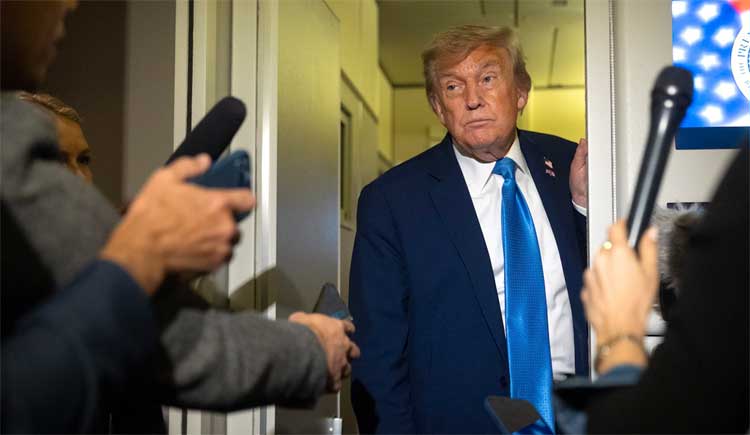
After nearly two years of deep internal rifts over the war in Gaza and unwavering U.S. support for Israel, Democrats are now confronting a new fault line: how to respond to former President Donald Trump’s growing interest in joining Israel’s military campaign against Iran.
While progressive Democrats are vocally opposed to any unilateral strike, party leaders remain cautious, wary of alienating key constituencies or appearing weak on national security.
For over two decades, there has been bipartisan consensus in Washington that Iran must not acquire nuclear weapons. The Islamic Republic has long been viewed as a destabilizing force in the Middle East, backing groups hostile to the U.S. and openly threatening Israel. Yet Trump’s apparent willingness to endorse or support Israeli military action against Iran is now exposing tensions within both major parties—especially among Democrats already fractured over America’s role in the Israel-Gaza conflict.
Progressives Push Back Against War Rhetoric
Progressives are taking a firm stand, warning that Trump’s approach risks dragging the U.S. into another costly war. Representative Ro Khanna (D-Calif.) called it “a defining moment for our party” and introduced bipartisan legislation with Rep. Thomas Massie (R-Ky.) to block any unauthorized U.S. military action against Iran without an explicit declaration of war from Congress.
Khanna also echoed Trump’s own “America First” campaign rhetoric while speaking to comedian Theo Von, who is popular among Trump’s base: “That’s going to cost this country a lot of money that should be being spent here at home.”
Senator Bernie Sanders (I-Vt.), another progressive voice, accused Israel of launching an unprovoked attack and warned that U.S. involvement would be “catastrophic.” Sanders reintroduced legislation to prohibit federal funding for military action against Iran and urged Trump to recall his inaugural promise of being “a peacemaker and a unifier.”
Democratic Leadership Strikes a Cautious Tone
Party leaders, however, have been more measured. Senate Majority Leader Chuck Schumer (D-N.Y.), who previously supported similar legislation during Trump’s first term, has yet to weigh in forcefully. In a brief statement following Israel’s initial strikes on Iran, he emphasized Israel’s right to self-defense and reaffirmed the U.S.’s “ironclad” commitment to its security.
Senator Jacky Rosen (D-Nev.) echoed those sentiments, signaling continued support for Israel while urging caution. For many centrist or establishment Democrats—especially those eyeing the 2028 presidential race—silence or ambiguity appears to be the prevailing strategy.
Joel Rubin, a former Obama-era State Department official, described the tightrope Democratic leaders are walking: “The beasts of the Democratic Party’s constituencies right now are so hostile to Israel’s war in Gaza that it’s really difficult to come out looking like one would corroborate an unauthorized war that supports Israel without blowback.”
Trump’s Role in the Current Crisis
Critics of Trump point to his decision in 2018 to withdraw from the Iran nuclear deal as the catalyst for today’s escalated tensions. Senator Chris Murphy (D-Conn.) argued, “The single reason Iran was so close to obtaining a nuclear weapon is that Trump destroyed the diplomatic agreement that put major, verifiable constraints on their nuclear program.”
Trump’s re-engagement with Iran through the lens of conflict is at odds with the non-interventionist stance he promoted during the 2024 campaign. Democrats like former Obama aide Tommy Vietor are urging party leaders to firmly oppose any military entanglement: “The leaders of the Democratic Party need to step up and loudly oppose war with Iran and demand a vote in Congress.”
Public Sentiment and Electoral Stakes
Polls show Democrats remain deeply split on U.S. support for Israel. A September 2024 survey by the Pearson Institute/AP-NORC found that about half of Democrats believe the U.S. is “too supportive” of Israel, while only 4 in 10 view the current level of support as appropriate. These divisions mirror growing unease about American military engagement in the Middle East, especially among younger and more progressive voters.
Rep. Yassamin Ansari (D-Ariz.), an Iranian American, underscored the human toll, noting that Iran’s civilian population lacks the infrastructure to withstand missile attacks: “The Iranian people are not the regime, and they should not be punished for its actions,” she said. “The Iranian people deserve freedom from the barbaric regime, and Israelis deserve security.”
Looking Ahead
As the Democratic Party tries to mend its fractured coalition ahead of the 2026 midterms and a looming 2028 presidential race, its stance on Iran could become a defining issue. With Trump poised to shape foreign policy debate from outside government, Democrats face mounting pressure to unify around a coherent, principled response—one that balances geopolitical caution with growing grassroots demand for peace and restraint.
Comments are closed.