
Delhi’s Toxic Air Seeps Indoors, Leaving Schools and Hospitals Exposed, Study Finds

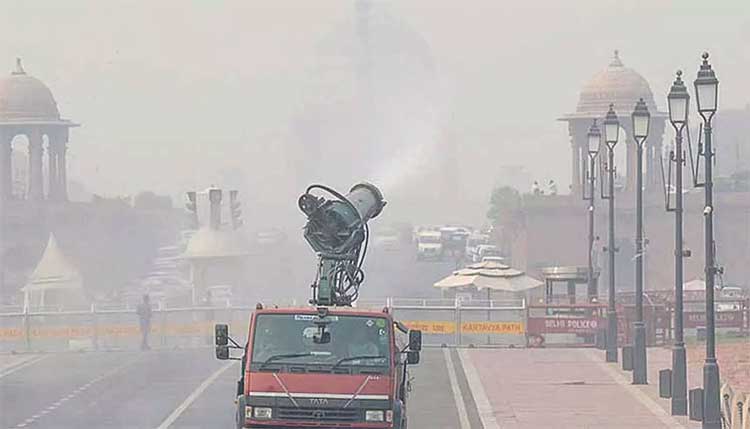
Millions of Delhi residents take comfort in a simple belief: shut the door, and the city’s poisonous air stays outside. A week-long field experiment by Hindustan Times shows that this assumption is dangerously flawed. The investigation found that polluted outdoor air seeps indoors with little resistance, rendering the boundary between inside and outside largely meaningless during severe smog episodes.
Tracking PM2.5 levels from January 14 to 20, reporters measured air quality simultaneously outdoors and inside a private school, a major hospital, and a residential home. The results were stark. At schools and hospitals—spaces meant to protect children, newborns, and the sick—indoor pollution routinely exceeded national safety limits by seven to eight times, closely mirroring outdoor conditions.
The findings suggest that unless people are inside sealed rooms equipped with high-efficiency air purifiers running continuously, there is little refuge from Delhi’s toxic air. Buildings not designed for such extreme environmental stress allow pollution to enter through ventilation systems, open doors and windows, and everyday structural leakage.
At a Rohini school, outdoor PM2.5 levels ranged from 246 µg/m³ to a peak of 502 µg/m³—up to nine times India’s safety standard. Inside classrooms, pollution remained alarmingly high, reaching 432 µg/m³ on the worst day. Similarly grim conditions were recorded at AIIMS Delhi, where PM2.5 levels inside cancer wards and mother-and-child wards hovered between 200 and 300 µg/m³, occasionally spiking above 400 µg/m³ in crowded outpatient areas.
By contrast, a control setting—a home in Vikaspuri with a continuously running air purifier—painted a very different picture. There, PM2.5 levels stayed mostly between 20 and 40 µg/m³, dropping as low as 18 µg/m³, well within national and World Health Organization guidelines.
The worst indoor readings coincided with January 17 to 19, when Delhi’s air quality index remained above 400 for three consecutive days, marking the city’s most severe January pollution spell since 2021.
Experts say the data underscores a harsh reality. “Due to much higher concentrations outside, pollution diffuses indoors,” said Dr Rakesh Kumar, president of the Society for Indoor Environment, calling the school and hospital readings “alarming.” While air purifiers help, he warned they are only a temporary solution, especially in poorly ventilated buildings with neglected HVAC systems.
Environmental advocates described the findings as a public health emergency. “Closing doors doesn’t keep families safe anymore,” said Bhavreen Kandhari of Warrior Moms. “The pollution is so high, indoors and outdoors, that the only real escape is to leave the city.”
Others stressed that indoor fixes alone cannot solve the crisis. “Hospitals should offer the highest protection because patients are most vulnerable,” said air pollution expert Sunil Dahiya of Envirocatalysts. “But ultimately, the only solution is to clean Delhi’s outdoor air—and that is still not happening.”
Comments are closed.